
ZAMBOANGA CITY, Philippines — The Philippines and Brunei Darussalam are deepening their maritime defense cooperation as the Philippine Navy (PN) and Royal Brunei Navy (RBN) conduct Maritime Training Activity (MTA) SEAGULL 10-2026 in Western Mindanao, bringing their personnel and warships together for another round of bilateral training focused on interoperability, coordination, and maritime security.
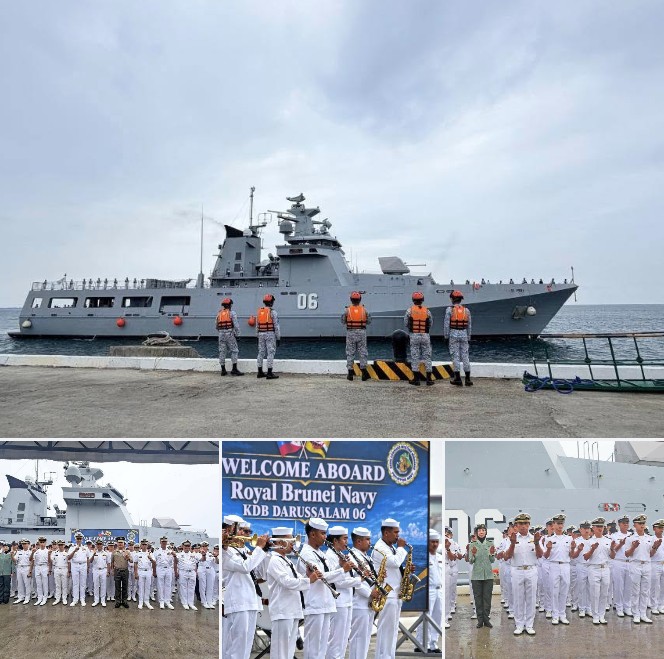
The activity formally opened on September 14, 2026, following the arrival of the Royal Brunei Navy’s KD DARUSSALAM 06 at Naval Station Romulo Espaldon in Zamboanga City on September 13.
Running from September 13 to 17, MTA SEAGULL 10-2026 places Filipino and Bruneian naval personnel in realistic maritime situations that require coordinated planning, clear communications, and synchronized action. The training is designed not simply to showcase the capabilities of the participating forces, but to strengthen their practical ability to operate alongside one another at sea.
At the heart of the exercise is interoperability—the capacity of separate military forces to communicate, coordinate, and carry out maritime activities together despite differences in procedures, systems, and organizational structures.
The participation of KD DARUSSALAM 06 and the Philippine Navy’s BRP RAJAH SULAYMAN (PS-20) provides both navies with an opportunity to conduct more complex at-sea training and translate years of bilateral engagement into practical cooperation in the maritime domain.
A Decade Of Bilateral Maritime Training
MTA SEAGULL 10-2026 also carries particular significance as the 10th iteration of the biennial bilateral activity between the two navies.
The previous iteration was hosted by Brunei Darussalam, continuing an established cycle of combined training that has provided Filipino and Bruneian sailors opportunities to develop professional relationships, exchange knowledge, and gain greater familiarity with each other’s operational procedures.
Repeated exercises such as SEAGULL are important because interoperability is not developed through a single training event. It is built progressively through sustained engagement, professional exchanges, coordinated planning, and repeated opportunities to operate together.
For the Philippines and Brunei, the continuation of the activity reflects a defense relationship that has moved beyond ceremonial engagement toward practical cooperation at sea.
Training Amid Western Mindanao Security Commitments
The latest iteration is also taking place against the backdrop of continuing Philippine Navy operational responsibilities in Western Mindanao.
Among these commitments is maritime security support associated with the September 14, 2026 Bangsamoro Parliamentary Election, requiring security forces to maintain readiness while supporting the broader effort to ensure a secure environment for the electoral process.
The simultaneous conduct of bilateral naval training and domestic maritime security missions highlights the operational demands facing the Philippine Navy in one of the country’s strategically important maritime areas.
Rather than treating bilateral engagement as separate from operational readiness, MTA SEAGULL provides an avenue for personnel to continue professional and interoperability training while the Navy maintains its existing maritime security responsibilities.
Western Mindanao is particularly significant to the Philippines because of its extensive coastline, island communities, vital sea routes, and proximity to neighboring states. Cooperation among maritime forces operating in and around the region therefore has implications beyond individual training events.
From Friendship To Practical Cooperation
For both navies, the value of MTA SEAGULL lies in turning a longstanding bilateral relationship into practical capabilities.
Training together allows personnel to become familiar with one another’s communications procedures, planning processes, maritime operating practices, and approaches to coordinated activities. These professional interactions can reduce friction when forces need to work together during future cooperative missions or other maritime engagements.
The exercise also demonstrates the role of regular defense engagement in maintaining trust between neighboring countries.
The Philippines and Brunei have maintained longstanding relations, and their maritime cooperation provides a mechanism for their naval forces to sustain professional contact while addressing the realities of an increasingly complex maritime security environment.
MTA SEAGULL 10-2026 therefore represents more than the movement of two warships into the same operating area. It is part of a longer process through which sailors from both countries develop the habits, communication, confidence, and understanding required for effective cooperation at sea.
Building Readiness Through Repetition
The 10th iteration of the activity underscores another principle of military preparedness: interoperability must be practiced to be sustained.
Modern maritime security increasingly requires forces to communicate and coordinate across national boundaries. Regular bilateral training gives participating personnel opportunities to identify procedural differences, improve coordination, and develop a common understanding of maritime operations.
For the Philippine Navy, these engagements also contribute to maintaining relationships with regional partners while continuing its own operational commitments. For the Royal Brunei Navy, participation reinforces its professional engagement with a neighboring maritime force and provides another opportunity to train alongside the Philippine Navy.
As MTA SEAGULL 10-2026 concludes in Western Mindanao, the immediate training period forms only one part of a much longer relationship.
The arrival of KD DARUSSALAM 06, the participation of BRP RAJAH SULAYMAN, and the coordinated activities of Filipino and Bruneian sailors represent the practical expression of a defense partnership sustained over years of engagement.
Ultimately, the exercise reinforces the commitment of the Philippines and Brunei Darussalam to maintain capable and professional maritime forces, strengthen interoperability, and contribute to peace, security, and stability in the region through sustained defense cooperation.