
MARIHATAG, Surigao del Sur — After nearly five months of persistent monitoring, a dedicated conservation team has captured clear footage of a dugong swimming along the surface of the waters off Marihatag, Surigao del Sur—providing fresh evidence that the elusive marine mammal continues to inhabit the area.
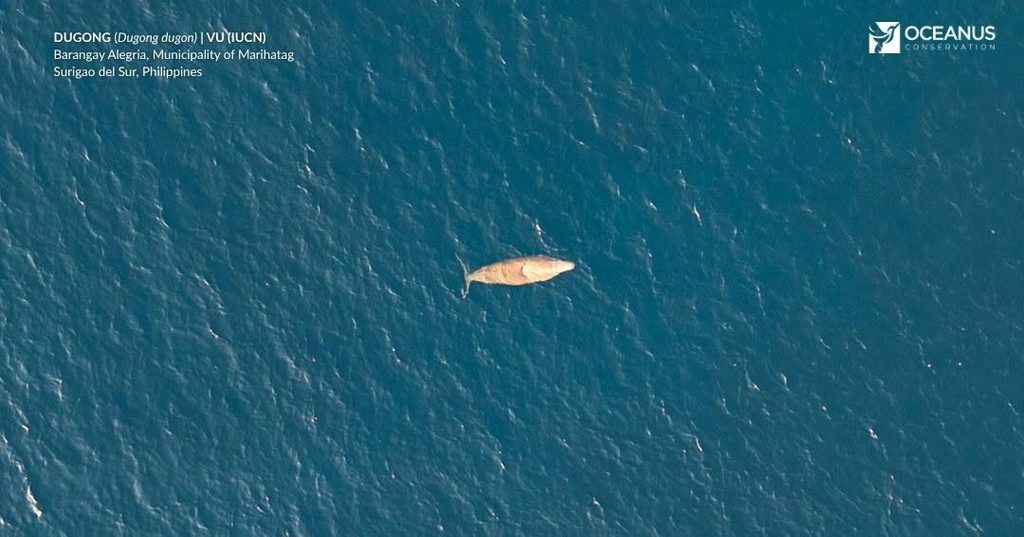
The sighting was recorded early on September 11, 2026, during one of the regular monitoring activities of the Dugong Bughaw Team, which has been conducting land-based observations and drone surveys along the municipality’s coast.
For the team, the encounter represented more than a rare wildlife sighting. It was the result of months of patient observation, repeated surveys and coordination with coastal communities determined to document and protect one of the Philippines’ most vulnerable marine mammals.
The team has been “rising with the tides” for almost five months, scanning coastal waters from land and using drones to search for signs of dugongs. Their persistence finally paid off when an individual was captured on video swimming close to the water’s surface along the Marihatag coast.
A rare glimpse of a vulnerable marine mammal
Dugongs, locally known as duyongs, are herbivorous marine mammals that depend heavily on seagrass meadows, which serve as their primary feeding grounds.
Their continued presence in Marihatag is significant because dugongs are elusive and difficult to monitor. Unlike many coastal animals, they spend much of their lives underwater, making sightings relatively uncommon and leaving researchers and conservationists dependent on repeated field surveys to establish whether populations remain in an area.
The dugong is classified globally as Vulnerable to Extinction on the International Union for Conservation of Nature (IUCN) Red List of Threatened Species. In the Philippines, it is also protected under DENR Administrative Order No. 55, Series of 1991, underscoring the importance of safeguarding remaining populations and their habitats.
The September 11 footage therefore provides an important piece of information for ongoing conservation work in Marihatag.
It confirms that at least one dugong was observed alive in the area during the monitoring period, although a single sighting cannot by itself establish the size, health or stability of the local dugong population.
A hopeful sighting amid recent losses
The discovery also carries added significance because it comes after reports of dugong strandings and deaths in nearby areas earlier this year.
Against that backdrop, documenting a live dugong in Marihatag offers a measure of hope while also highlighting the need for sustained protection.
For conservationists, the sighting is not a reason to slow down monitoring. Instead, it reinforces the need to understand how many dugongs use the area, where they feed, how frequently they visit coastal waters and what threats they may face.
The answers require continuous field observations and the accumulation of reliable data over time.
Protecting the seagrass means protecting the dugong
Because dugongs depend on seagrass beds for food, their survival is closely tied to the condition of coastal ecosystems.
Protecting dugongs therefore goes beyond watching for the animals themselves. It also means protecting the seagrass meadows where they feed and ensuring that coastal activities do not degrade the habitats upon which the animals depend.
The Dugong Bughaw Team emphasized the need for further study and continuous data collection, particularly in understudied coastal areas such as Marihatag.
Every confirmed sighting can help build a clearer picture of dugong distribution and habitat use. Over time, such information can help conservation workers and local authorities identify important areas that may require greater protection and community-based management.
Conservation built with coastal communities
The monitoring effort is not being carried out by the conservation team alone.
The project is being undertaken in collaboration with local communities in coastal barangays, Bantay Dagat personnel and the local government of Marihatag, Surigao del Sur.
Their participation is crucial in a municipality where residents are among those who regularly see and interact with the coastal environment.
For the team, community involvement is not simply logistical support. It is part of building a long-term conservation effort in which residents become partners in documenting sightings, protecting marine habitats and responding to threats involving dugongs and other coastal wildlife.
The September 11 sighting demonstrates what sustained community-based monitoring can accomplish.
After months of watching the sea, the team finally caught a glimpse of the animal it had been searching for—a quiet reminder that beneath Marihatag’s waters, an important marine ecosystem continues to support life that remains largely unseen.
The footage is only one observation, but it adds a valuable piece to the growing body of evidence about dugongs in Surigao del Sur.
And for the conservationists who have spent months rising with the tides, it is also a reason to keep looking.
Because every sighting matters—and for the shy duyong, continued vigilance may be one of the strongest forms of protection.
About Oceanus Conservation
Oceanus Conservation is a non-stock, non-profit environmental organization headquartered in Makati City, Philippines, established in March 2020. The organization focuses on the restoration and protection of Philippine marine habitats, particularly mangroves and seagrass ecosystems, which it describes as undervalued, understudied and underprotected. Its mission is to conserve and rehabilitate blue carbon ecosystems through multi-stakeholder collaboration, combining technology and local ecological knowledge while advancing policy advocacy and social and behavioral change among Filipino communities. Oceanus envisions, by 2035, becoming a leading organization in community-centered conservation grounded in the rights of nature, a sustainable carbon-neutral economy and a culture of care for climate-resilient Filipinos. Its work in Marihatag forms part of this broader advocacy to strengthen marine habitat protection and generate the scientific and community-based information needed to conserve the country’s remaining seagrass and other coastal ecosystems.