
CAGAYAN DE ORO — A checkpoint operation involving a large convoy of Moro Islamic Liberation Front (MILF) members in Lanao del Norte has triggered a new and potentially sensitive dispute over coordination, security protocols, and the movement of armed personnel as the 2026 BARMM elections approach.
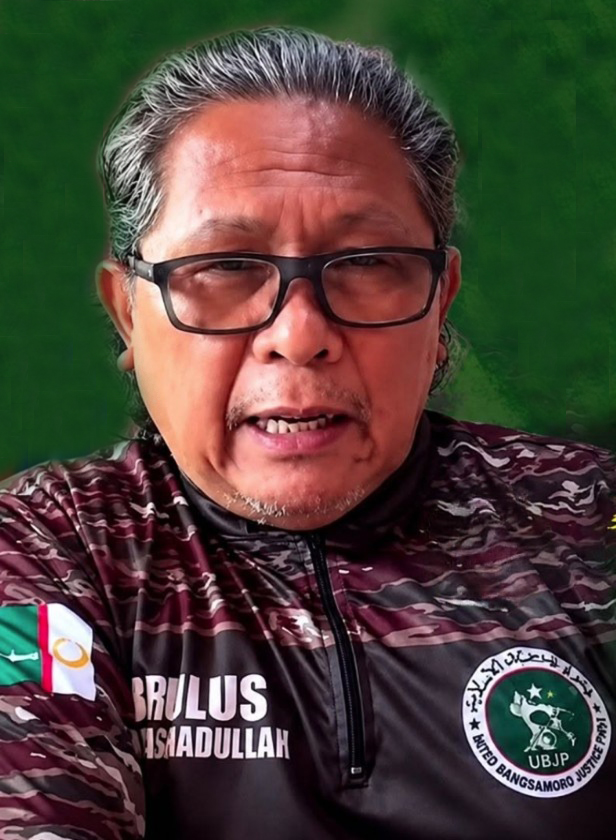
MILF 131st Brigade Commander Abdurahman “Commander Bravo” Macapaar has announced that Philippine Army and Philippine National Police (PNP) personnel will no longer be allowed to enter his group’s declared Area of Responsibility (AOR) without prior coordination with MILF authorities.
Macapaar’s declaration came after a joint Armed Forces of the Philippines (AFP)-PNP checkpoint operation on September 2, 2026, in Barangay Libertad, Kolambugan, Lanao del Norte, where a convoy of 23 vehicles and five motorcycles carrying MILF members was stopped while reportedly traveling toward Camp Kura-Kura in Barangay Tamparan, Munai, Lanao del Norte.
The convoy was reportedly headed to attend an MILF assembly.
The incident has produced sharply different perspectives from the MILF side and government security forces, although both accounts indicate that the confrontation ended peacefully and that the convoy eventually returned toward Picong, Lanao del Sur.
Bravo objects to checkpoint treatment
Macapaar expressed strong dissatisfaction with the manner in which the convoy was stopped and subjected to security checks.
According to his account, the group was identified as an MILF convoy but was nevertheless subjected to strict checkpoint procedures. He said the treatment caused frustration among his members and questioned why the convoy was not accorded what he described as consideration or “favor” by security forces in Lanao del Norte.
“We do not want trouble and we avoid trouble, but if we are picked on, we will not allow ourselves to be bullied,” Macapaar said.
He subsequently declared that military and police personnel should not conduct patrols or other activities within the 131st Brigade’s AOR without prior coordination with the MILF leadership.
The announcement places renewed attention on the delicate security environment in areas where government forces and MILF structures operate alongside the continuing Bangsamoro peace process.
AFP-PNP: Checkpoint was for public safety
The government security forces, however, gave a different account of the circumstances surrounding the interception.
In a joint statement, the 2nd Mechanized Infantry “Magbalantay” Brigade and the Lanao del Norte Police Provincial Office said the checkpoint in Kolambugan was conducted as part of law enforcement and public-safety operations.
The military said the operation was undertaken by the 5th Mechanized Infantry Battalion and the PNP as a deterrence measure and as part of efforts to maintain peace and public safety, particularly with the 2026 BARMM elections approaching.
Security forces said they had received information that approximately 200 MILF members were traveling toward Camp Kura-Kura, with around half reportedly wearing uniforms and carrying firearms.
The convoy was subsequently stopped for routine verification.
The AFP-PNP statement said the group was unable to present proof of prior coordination for its movement through the area.
Authorities informed the MILF members that they could not proceed while carrying firearms, citing the prohibition against MILF members bringing firearms during the movement.
According to the military, negotiations were conducted at the checkpoint and the MILF members eventually acknowledged the restriction.
The group then returned toward Picong, Lanao del Sur, rather than proceeding to the assembly.
Security forces reject escalation
Despite the confrontation over procedures, the AFP and PNP emphasized that the incident was resolved without violence.
The joint statement said the situation was handled “peacefully and professionally,” with government security forces facilitating the convoy’s safe return.
The military also stressed that its operations were not intended to undermine the peace process.
“The AFP and PNP respect the ongoing peace process and existing peace mechanisms,” the statement said.
Government forces urged groups planning large movements, particularly those involving armed personnel, to coordinate with the appropriate authorities beforehand.
They said timely coordination could prevent misunderstandings, address security concerns peacefully, and protect communities along the route.
The government position effectively frames the incident not as a confrontation between the state and the MILF, but as a security and coordination issue involving a large organized movement of personnel, some of whom were reportedly armed and in uniform.
Election security adds another layer
The timing of the incident is significant.
With the 2026 BARMM elections approaching, security forces are expected to intensify checkpoint operations and monitoring of movements involving armed groups and other potential sources of election-related security risks.
The 2nd Mechanized Infantry Brigade said it would enhance simultaneous random checkpoints in coordination with the PNP, other national government agencies, local government units, and the Commission on Elections (COMELEC).
Authorities also appealed to the public not to panic and warned against spreading unverified information on social media that could unnecessarily escalate tensions.
The statement underscores the broader challenge facing security agencies in the Bangsamoro: maintaining public safety and enforcing firearms and election-related security regulations while ensuring that their actions do not unnecessarily disrupt established peace mechanisms.
A potentially sensitive test for coordination
Macapaar’s announcement that government security forces will require prior coordination before entering his AOR could become a sensitive issue if interpreted as a restriction on the movement of state security forces.
The Philippine Army and PNP, as government security institutions, retain responsibilities for public safety, law enforcement, and the enforcement of applicable laws and regulations. At the same time, the Bangsamoro peace process has established mechanisms intended to prevent misunderstandings and manage interactions between government forces and former combatant structures.
The September 2 incident illustrates how quickly those two imperatives can collide when a large convoy involving uniformed and reportedly armed MILF members moves across jurisdictions without what government authorities describe as documented prior coordination.
For the MILF leadership, the issue centers on how its members are treated by government forces and whether movements associated with peace-process activities should be handled through established coordination mechanisms.
For the AFP and PNP, the concern is the presence and movement of armed personnel in a public area, particularly during a period of heightened security preparations for the BARMM elections.
Both positions underscore the importance of clear and timely communication.
No shots fired, but tensions remain
Importantly, the September 2 encounter did not result in reported gunfire or physical confrontation.
The convoy was stopped, negotiations were conducted, and the MILF group returned to Picong.
That peaceful outcome may prove critical in preventing the incident from developing into a broader security problem.
But Macapaar’s subsequent directive demonstrates that the encounter has not simply disappeared.
His warning against uncoordinated police and military presence in the 131st Brigade’s AOR introduces a new point of contention that will require careful handling by both the MILF and government security authorities.
The immediate challenge is therefore not only determining what happened at the Kolambugan checkpoint, but also ensuring that future movements of MILF personnel and government forces are governed by clearly understood procedures.
As the BARMM elections draw closer, such coordination could become increasingly important. Large movements of armed personnel, whether by government forces or former combatant groups, carry heightened security implications in a region where the peace process remains a work in progress.
For now, the September 2 incident ended without violence. Whether it remains an isolated disagreement over checkpoint procedures or becomes a larger dispute over jurisdiction, coordination and security will depend largely on how both sides manage their next engagements.
The Philippine Army and PNP have yet to indicate publicly whether they will recognize or respond to Macapaar’s unilateral directive concerning entry into the MILF’s claimed AOR. Government security authorities have instead reiterated their call for prior coordination and cooperation among all stakeholders.
What is clear is that the incident has exposed a potentially consequential fault line: the need to enforce public-safety and firearms rules while preserving the coordination mechanisms that underpin the Bangsamoro peace process.