
ZAMBOANGA CITY — Patrick Dylan Wee was only a Grade 10 student, but by the age of 15 or 16, he had already accomplished something many students could only dream of. A Gold Awardee in the 2024 International Mathematics Olympiad of Southeast Asia (IMOCSEA), Patrick had distinguished himself through his ability, discipline and talent in mathematics. He had already brought pride to his school and recognition to the Philippines in an international academic competition. Yet on Tuesday, August 18, 2026, his promising young life was abruptly cut short in a shooting inside the Ateneo de Zamboanga University–Junior High School campus in Tumaga, Zamboanga City.
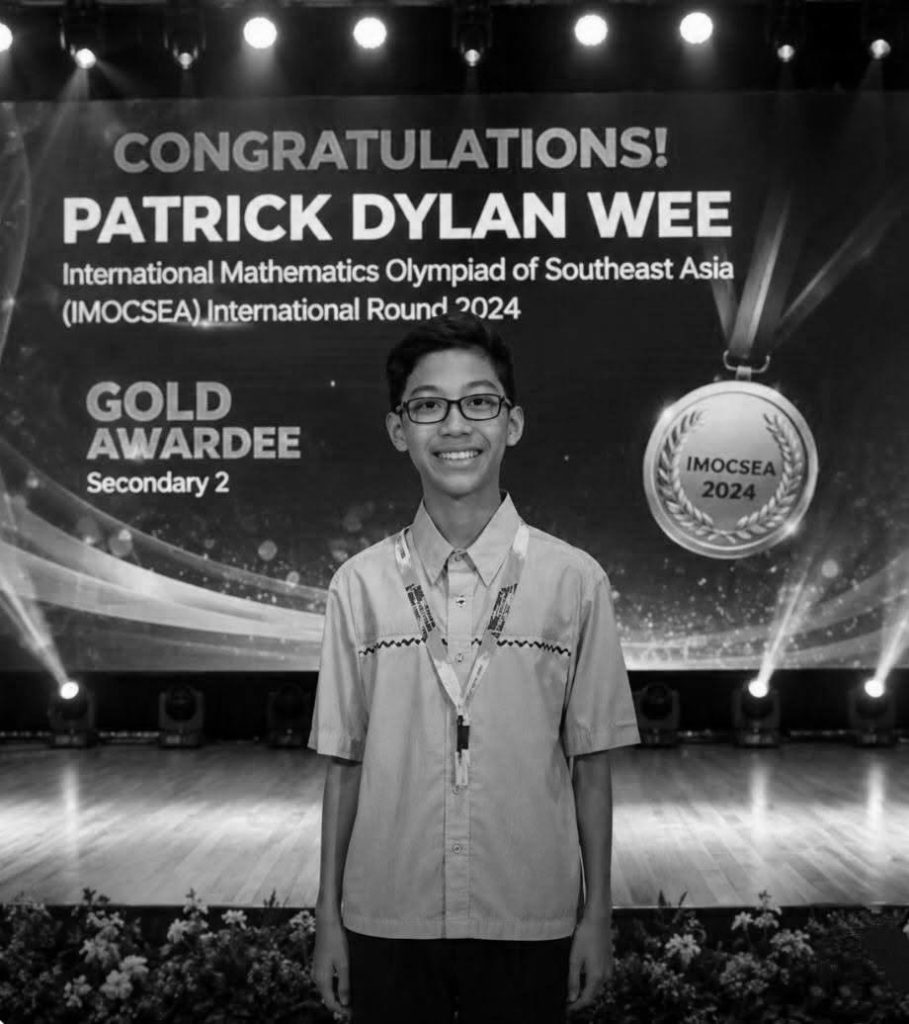
Patrick was reportedly shot inside the school by another student, a Grade 8 student who was identified as the suspected gunman. Following the shooting, the suspect reportedly died by suicide. Authorities are continuing to investigate the circumstances surrounding the incident, including how the firearm entered the school, what preceded the shooting and what may have led to the violence. The full motive has not yet been established, and any claims about what drove the attack must remain subject to the ongoing investigation.
But while investigators work to reconstruct the events of that tragic afternoon, there is another story that must not be lost amid the police reports, forensic examinations and questions surrounding the shooting. That is the story of Patrick himself—a young student whose life was not defined by the violence that took it away.
Patrick was known for his academic ability, particularly in mathematics. His Gold Award at the International Mathematics Olympiad of Southeast Asia in 2024 was not simply a medal or certificate. It was evidence of a young mind capable of competing and succeeding on an international stage. At an age when many children are still discovering their strengths and deciding what they want to become, Patrick had already demonstrated an extraordinary aptitude in a field that demands patience, concentration, logical thinking and persistence.
There was, undoubtedly, still so much ahead of him.
He had more years of school to complete, more things to learn, more competitions to join, more friendships to make and more opportunities to discover what kind of life he wanted to build. Whether he would eventually pursue mathematics, engineering, science, education or an entirely different path is something nobody can know. What can be known is that he had the time and the opportunity to find out. That opportunity was taken from him inside a school campus—the very place where children are expected to be able to learn, grow and dream in safety.
That is what makes Patrick’s death particularly devastating.
A school is not supposed to be a battlefield. A classroom is not supposed to become a crime scene. A parent sending a child to school should not have to entertain the possibility that the child may not come home because another student brought a firearm onto campus.
The tragedy in Tumaga therefore raises questions that extend far beyond the circumstances of one shooting. Investigators must establish how the firearm was obtained and brought into the school, whether there were warning signs that could have been identified earlier, whether existing security and child-protection measures were sufficient, and whether anything could have been done to prevent the incident. These are not questions that should be asked merely to assign blame after the fact. They are questions that must be answered if schools are to learn from what happened and if another family is to be spared the kind of grief Patrick’s family is now experiencing.
The circumstances are made even more painful by the fact that both individuals at the center of the tragedy were students. Patrick was the victim, and nothing about the circumstances should diminish the injustice of his death or the suffering of his family. At the same time, the reported death of the student identified as the suspected gunman presents another disturbing reality that society cannot simply ignore: violence in schools can consume young lives on both sides of a tragedy.
Recognizing that reality does not mean excusing the alleged act. It means confronting the larger problem with honesty. When violence enters a school, the consequences can be irreversible in seconds. A student can become a victim. Another young person can become responsible for an act that destroys lives, including his own. Families on both sides can be left carrying consequences that will never fully disappear.
The Philippines has already seen another deadly school shooting in Tacloban in June, making the Zamboanga incident particularly alarming. Two separate incidents involving young people and firearms within a relatively short period should force a serious national conversation about how firearms are secured, how threats and warning signs are reported, how schools respond to students in distress, and how authorities and families work together to protect children. The recurrence of violence, however, should not lead to premature conclusions about a common motive or cause. Each incident must be investigated on its own evidence, while the broader pattern is examined for lessons that can prevent another tragedy.
The issue of firearms in schools deserves especially urgent attention. Schools can strengthen gates, deploy guards, conduct emergency drills and establish security protocols, but those measures can only go so far if a firearm is already accessible to a child. The question of how young people obtain access to weapons must therefore be part of any serious response. Firearms kept in homes or elsewhere must be secured in a manner that prevents unauthorized access, particularly by children and adolescents. Families, schools, law-enforcement agencies and government institutions all have a role in closing the gaps that allow weapons to reach places where they should never be.
But security alone will not solve the entire problem. Schools are communities, and children do not exist only as students who attend classes, submit assignments and take examinations. They also face emotional, social and personal difficulties that adults may not always see. There must be safe and credible channels through which students can report threats, concerning behavior, bullying, intimidation or other warning signs. Teachers and school personnel must be supported in recognizing situations that require intervention, while students must know that asking for help is not an act of betrayal but an important part of keeping themselves and their classmates safe.
At the same time, the public must resist the temptation to turn tragedies like this into spectacle. If images or footage of the shooting circulate, sharing them can deepen the trauma experienced by students, families and witnesses while doing little to advance the search for truth. Patrick’s life deserves more than to be remembered through the final moments of his death. His story should not be reduced to the gunfire, the bloodshed or the identity of the person accused of killing him.
He deserves to be remembered for what came before.
He was the student who loved numbers. He was the young competitor who earned international recognition. He was the Grade 10 student who carried the name of his school and country into an international mathematics competition. He was a son, a classmate, a friend and a young person whose future had not yet been written.
That future now exists only in the possibilities that were taken away.
For Patrick’s family, no investigation, security reform or government response can restore the son they lost. No award can compensate for the absence that will now remain at their table, in their home and in their lives. The pain of losing a child is not measured in statistics, and Patrick should never be remembered merely as another casualty in a growing list of violent incidents.
His name should instead remind the country of what is lost every time violence enters a school: not just a life, but an entire future.
There will be unanswered questions in the days ahead. Investigators will determine what happened, authorities will examine the evidence, and the school community will have to confront the trauma left behind. Those responsible for determining how the firearm entered the campus and whether existing safeguards failed must do their work carefully and transparently. The objective should not simply be to explain what happened after Patrick was killed. It must be to understand how such an incident was possible in the first place.
Because Patrick should have been preparing for his next mathematics lesson, not becoming the subject of a police investigation.
He should have been worrying about examinations, competitions and the ordinary challenges of growing up—not whether he would survive a shooting inside his own school.
His family should have been looking forward to the years ahead, not preparing to bury their son.
And his classmates should be remembering his achievements, his personality and his presence in their school—not trying to process the trauma of witnessing or learning about violence in a place they believed was safe.
Patrick Dylan Wee was a young life filled with promise. His Gold Award in the 2024 International Mathematics Olympiad of Southeast Asia showed only one part of what he was capable of achieving. It was a glimpse of a future that could have unfolded in countless ways.
That future has now been taken away.
The country cannot bring Patrick back. But it can refuse to allow his death to become just another headline that fades after the investigation ends. His death must compel schools, families, authorities and communities to look harder at the conditions that allow violence to reach children, to strengthen the safeguards that failed or proved insufficient, and to create environments where students can seek help before conflicts and threats become irreversible.
Most of all, Patrick must be remembered not for the bullets that ended his life, but for the promise that existed before them.
He was young. He was talented. He had dreams.
He deserved the chance to grow old enough to fulfill them.
And every child in every classroom across the Philippines deserves that same chance.