
The opening of the Mabuhay Underpass in General Santos City should have been remembered as the culmination of years of sacrifice, engineering ingenuity, and public investment. Instead, it immediately became another chapter in the country’s never-ending political blame game, where the spotlight shifted away from the infrastructure itself and focused instead on who deserved to claim credit for its completion. Rather than celebrating a long-awaited solution to one of the city’s worst traffic bottlenecks, the public was treated to a war of statements between elected officials, each defending their role in a project that, from the very beginning, belonged not to any politician but to the Filipino people who paid for it.
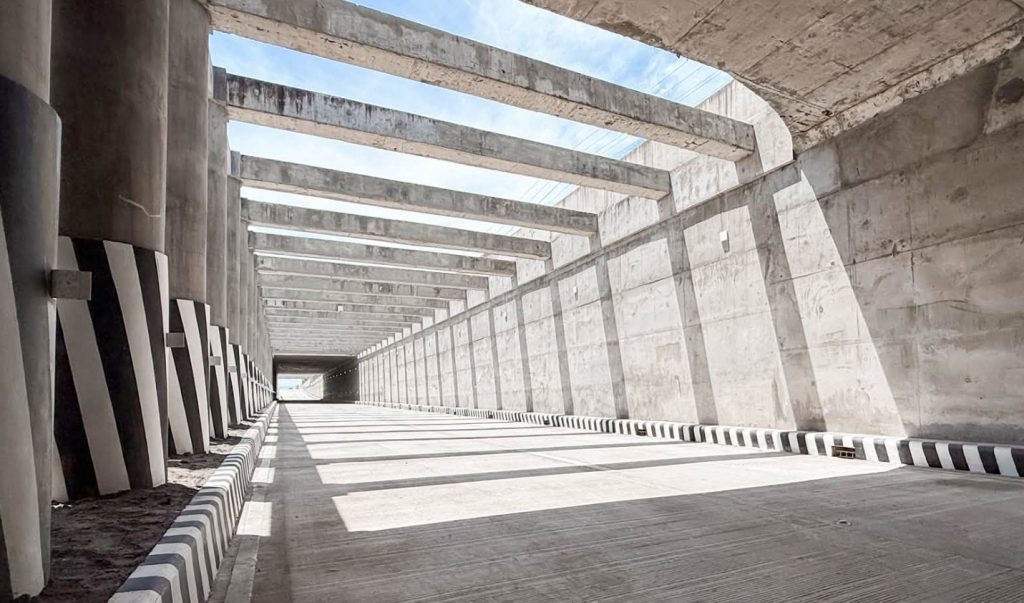
When construction began in June 2022, the Mabuhay Underpass was introduced as one of the flagship infrastructure projects of the national government under the Build, Build, Build Program. With an initial project cost of approximately ₱650 million, later revised to about ₱681 million as engineering adjustments became necessary, the underpass promised to decongest one of General Santos City’s busiest intersections and improve mobility in one of Mindanao’s fastest-growing economic centers. The public welcomed the project despite knowing that years of construction would inevitably bring inconvenience. Motorists accepted longer travel times, businesses endured declining customer traffic, commuters adjusted their daily schedules, and residents tolerated the dust, noise, and congestion because they believed the temporary hardship would eventually give way to lasting benefits.
That expectation, however, was tested repeatedly as the project failed to meet its original completion schedule. Initially targeted for completion in September 2024, the underpass remained unfinished well beyond its deadline, forcing the public to continue enduring worsening traffic congestion. Frustration naturally grew as residents questioned why a project of such importance had become another example of delayed government infrastructure. Criticism intensified not because people opposed the project, but because every extension of construction meant another day of economic losses, wasted fuel, lost productivity, and unnecessary inconvenience for thousands of motorists and commuters passing through the area.
As public dissatisfaction mounted, the Department of Public Works and Highways explained that the delays were caused by engineering realities that emerged during construction. Excavation revealed sandy and volcanic soil conditions, accompanied by groundwater seepage that threatened to turn the underpass into a flood basin during heavy rains if the original design were followed. Rather than proceeding with a flawed structure, engineers redesigned the project to include a more sophisticated drainage system consisting of underground reservoirs, perforated pipes, and natural water discharge leading toward the Silway River. From a technical standpoint, the decision was justified. Infrastructure should never sacrifice long-term safety and functionality merely to satisfy political deadlines.
Yet while the redesign may have been necessary, it also exposed a fundamental weakness in the planning process. Major infrastructure projects should not discover their most significant engineering challenges only after construction has already begun. Comprehensive geotechnical investigations, hydrological studies, and soil analyses are intended precisely to identify such risks before excavation starts. Every redesign undertaken during construction inevitably translates into additional costs, longer implementation periods, and greater inconvenience for the public. Even Public Works Secretary Vince Dizon acknowledged this reality when he emphasized the importance of thorough planning and engineering preparation before groundbreaking to prevent unnecessary delays and cost overruns. His observation should not be viewed merely as a reflection on the Mabuhay Underpass but as an important lesson for every future infrastructure project undertaken by the government.
Unfortunately, the completion of the project did not immediately redirect public attention toward these important lessons. Instead, political controversy overshadowed what should have been a celebration of engineering achievement. The public exchange between General Santos City Lone District Representative Shirlyn Bañas-Nograles and Mayor Lorelie Geronimo Pacquiao transformed the inauguration into a debate over political ownership rather than public service. Representative Bañas defended her criticism by asserting that her office had worked behind the scenes to secure funding, coordinate with the Department of Public Works and Highways, resolve technical obstacles, and even finance geotechnical and Electrical Resistivity Tomography studies that helped determine the causes of the project’s delays. She disputed suggestions that recent interventions accelerated the project’s completion, arguing that commitments to finish the underpass had already been made months earlier. Mayor Pacquiao, on the other hand, called for unity during the inauguration and reminded the public that the underpass serves every resident of General Santos City regardless of political affiliation. She stressed that taxpayers ultimately made the project possible and urged leaders to move beyond political disputes.
Both officials are entitled to explain their respective contributions. Public officials naturally have the responsibility to account for their actions and inform their constituents of the work they have undertaken. However, the larger problem begins when infrastructure projects become instruments for political branding rather than symbols of effective governance. The question should never revolve around which politician deserves the loudest applause during an inauguration. Instead, the more meaningful question is whether government institutions functioned effectively enough to deliver the project on time, within budget, and according to sound engineering standards. Public infrastructure is not the accomplishment of one elected official but the product of a complex collaboration involving Congress, national government agencies, technical experts, contractors, local government units, utility companies, and countless public servants working toward a common objective.
Reducing a multi-year infrastructure project to the personal achievement of a single politician diminishes the contributions of the professionals whose expertise made its completion possible. Engineers who redesigned the drainage system, geologists who analyzed the soil conditions, project managers who coordinated daily operations, construction supervisors who ensured compliance with safety standards, surveyors who recalculated alignments, and hundreds of skilled laborers who spent years under the heat and rain transforming blueprints into reality rarely receive the recognition afforded to those standing on the inauguration stage. Yet without their competence, dedication, and perseverance, no amount of political influence could have completed the underpass. Public infrastructure is built not through speeches or social media posts but through technical knowledge, disciplined project management, and the hard work of thousands of individuals whose names seldom appear in newspaper headlines.
Equally deserving of recognition are the ordinary citizens of General Santos City who bore the greatest burden throughout the project’s implementation. Every day of delay translated into additional fuel expenses for motorists, reduced income for transport operators, lost business opportunities for entrepreneurs, and countless hours wasted in traffic. These sacrifices were borne not by politicians but by ordinary taxpayers whose contributions financed every phase of the project. They asked for no special recognition and sought no political advantage. Their only expectation was that the government would deliver the infrastructure they had already paid for. In many ways, they became the project’s silent partners, carrying the economic and social costs of development while waiting patiently for its promised benefits.
Another issue that deserves public attention is the manner in which the project’s opening became associated with ceremonial schedules rather than purely operational readiness. Reports indicating that previously discussed opening dates were not followed because of the timing of inspections by national officials raise legitimate questions about government priorities. Once engineers certify that an infrastructure project is safe for public use, its immediate purpose should be to serve the people. Roads exist to facilitate mobility, reduce travel time, and support economic activity—not to wait for ribbon-cutting ceremonies or accommodate the schedules of visiting dignitaries. Public service should always take precedence over political symbolism.
The controversy surrounding the Mabuhay Underpass should therefore serve as a reminder that governance is not measured by who appears most prominently during inauguration ceremonies but by how effectively public institutions work throughout the life of a project. Leadership is demonstrated not only during moments of celebration but also during periods of uncertainty, criticism, technical setbacks, and public frustration. Citizens expect their leaders to solve problems collaboratively, not to compete for recognition once the work has already been completed. Political disagreements are inevitable in a democracy, but they should never overshadow the broader purpose of public infrastructure, which is to improve the quality of life of every Filipino regardless of political affiliation.
Today, motorists finally pass through the Mabuhay Underpass with the hope that years of inconvenience are now behind them. Traffic will gradually improve, businesses will begin to recover, and the city will enjoy the long-term economic benefits envisioned when the project was first conceived. Those achievements deserve to be celebrated. But they should also remind every public official that infrastructure projects are funded by the people, built by the expertise of professionals, sustained by the patience of communities, and entrusted to government institutions that exist to serve the public interest. Political leaders may come and go, but roads, bridges, and underpasses remain as lasting investments belonging to the citizens who financed them. The greatest credit, therefore, does not belong to the loudest political voice or the most visible public official. It belongs to the people of General Santos City, whose patience, sacrifices, and taxes transformed a long-delayed promise into a permanent public asset.