
GENERAL SANTOS CITY, Philippines — The death toll from the powerful magnitude 7.8 earthquake that struck off the coast of Sarangani on Sunday has climbed to 37, while at least 200 people were injured and 12 remain missing, according to the latest report from the Office of Civil Defense (OCD).
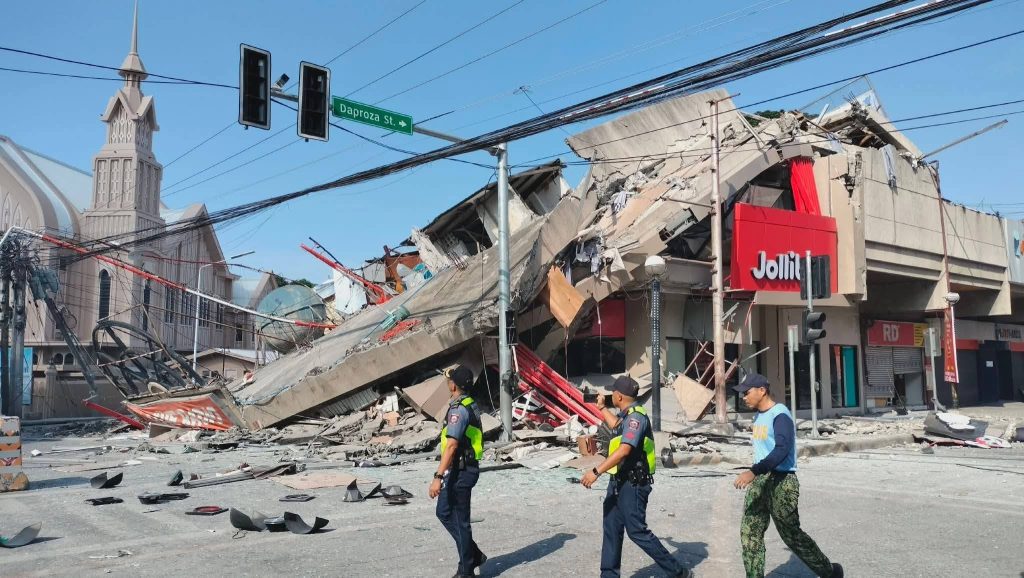
Speaking during a situation briefing, Office of Civil Defense Officer-in-Charge Assistant Secretary Bernardo Rafaelito Alejandro IV said the majority of the fatalities were recorded in the SOCCSKSARGEN Region, which bore the brunt of the devastating earthquake.
Of the 37 confirmed deaths, 33 were recorded in Region 12, including 19 fatalities in Sarangani Province, 12 in General Santos City, and two in South Cotabato. Meanwhile, four deaths were reported in the Davao Region.
As search and rescue operations continue, authorities warned that casualty figures may still change as assessment teams reach affected communities and retrieval operations progress.
General Santos Identified as Hardest-Hit Area
Based on field assessments conducted jointly by national government agencies and local officials, General Santos City has been identified as the area most severely affected by the earthquake.
Alejandro said government representatives have already met with local officials in General Santos City and Sarangani Province to assess urgent needs and coordinate response efforts.
“The national government is prepared to provide any additional assistance necessary,” he said, noting that while the disaster has caused significant destruction, the situation remains manageable at the local government level.
Among the government’s immediate priorities is ensuring the continued operation of hospitals and emergency facilities. The OCD announced it will deploy generator sets and fuel supplies to support healthcare institutions and critical infrastructure affected by power interruptions.
Members of various uniformed services continue to conduct retrieval and rescue operations in damaged structures, while OCD Region 12 remains on heightened monitoring status in close coordination with national agencies.
Authorities are also scheduled to conduct further site inspections and damage assessments to determine the full extent of destruction and identify the immediate needs of affected communities.
General Santos Under State of Calamity
In response to the widespread damage, General Santos City has officially been placed under a State of Calamity following the approval of a resolution during the seventh special session of the 21st Sangguniang Panlungsod.
The emergency declaration was initiated upon the recommendation of the General Santos City Disaster Risk Reduction and Management Council (CDRRMC), enabling the city government to rapidly access disaster funds and implement urgent response measures.
Mayor Lorelie Geronimo Pacquiao convened the special session to facilitate immediate action as authorities continue to respond to the aftermath of the earthquake, which struck at approximately 7:37 a.m. and generated Intensity VI shaking in the city.
Initial assessments revealed significant damage to public and private buildings, infrastructure, and essential facilities. Authorities also continue to monitor the threat posed by persistent aftershocks.
Under the State of Calamity, local officials can accelerate relief distribution, emergency procurement, rehabilitation projects, and recovery operations while strengthening inter-agency coordination to protect affected residents.
As of the latest city report, General Santos City has recorded 142 injured individuals, six missing persons, and 11 confirmed fatalities, although assessments and validation efforts remain ongoing.
Classes and Government School Operations Suspended
Amid continuing aftershocks and ongoing safety inspections, the Department of Education (DepEd) in General Santos City announced the suspension of classes and office work in all public elementary and secondary schools until further notice.
The suspension aims to allow DepEd engineers, the Department of Public Works and Highways (DPWH), Disaster Risk Reduction and Management personnel, and other authorized inspectors to thoroughly examine school buildings and classrooms for structural damage.
“The safety of our learners is our main priority,” DepEd said in its advisory.
The move comes as parents, students, and teachers grapple with the aftermath of the disaster, which disrupted what should have been the opening days of the academic year.
Commercial Flights Restricted
The Civil Aviation Authority of the Philippines (CAAP) has also imposed restrictions on flight operations at General Santos Airport following the earthquake.
Under a Notice to Airmen (NOTAM) effective from June 8 until June 11, only government, military, and humanitarian flights are allowed to land and take off from the airport.
Commercial passengers have been advised to coordinate directly with their respective airlines regarding flight schedules and possible cancellations.
The restriction is intended to prioritize emergency response activities and facilitate the transport of rescue personnel, relief supplies, and humanitarian assistance into affected areas.
Specialized Rescue Teams Deployed
To strengthen ongoing emergency operations, the Bureau of Fire Protection (BFP) Region 11 dispatched its Special Rescue Force (SRF) to General Santos City.
The deployment was immediately ordered by BFP Region 11 Regional Director FCSUPT Junito F. Maslang following instructions from FCSUPT Renato B. Capuz, Director for the Special Rescue Force.
The team, led by FCINSP Christian B. Cena, consists of 11 highly trained rescue personnel and three emergency medical service responders equipped with specialized rescue equipment.
The contingent departed from Davao City and arrived in General Santos City to augment local response units and provide additional manpower for rescue, retrieval, and emergency medical operations.
BFP officials said they remain prepared to deploy additional personnel and resources should the situation require further reinforcement.
Public Urged to Remain Vigilant
As aftershocks continue to be felt across affected areas, authorities are urging residents to remain alert and strictly follow official advisories and safety protocols.
Officials assured the public that national government agencies remain in constant coordination with local government units and are prepared to provide all necessary assistance in accordance with the directives of President Ferdinand Marcos Jr. and Department of National Defense Secretary and National Disaster Risk Reduction and Management Council Chairperson Gilberto Teodoro Jr.
While rescue teams continue searching for the missing and communities begin the difficult process of recovery, the earthquake has left a deep mark on thousands of families across Mindanao, many of whom now face the challenge of rebuilding their homes and lives amid grief, uncertainty, and continuing seismic activity.