
ALABEL, Sarangani Province — Authorities rescued a total of 53 native and exotic wildlife specimens during a joint anti-wildlife trafficking operation conducted by the Criminal Investigation and Detection Group (CIDG) and the Department of Environment and Natural Resources (DENR) in Barangay Maribulan, Alabel, Sarangani Province, on June 4.
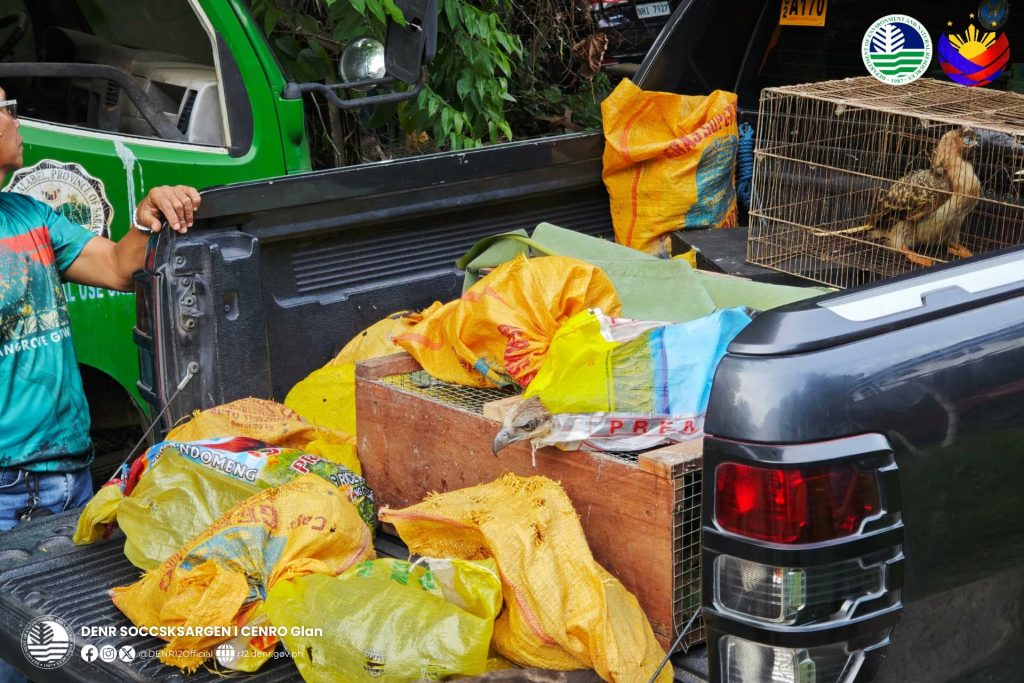
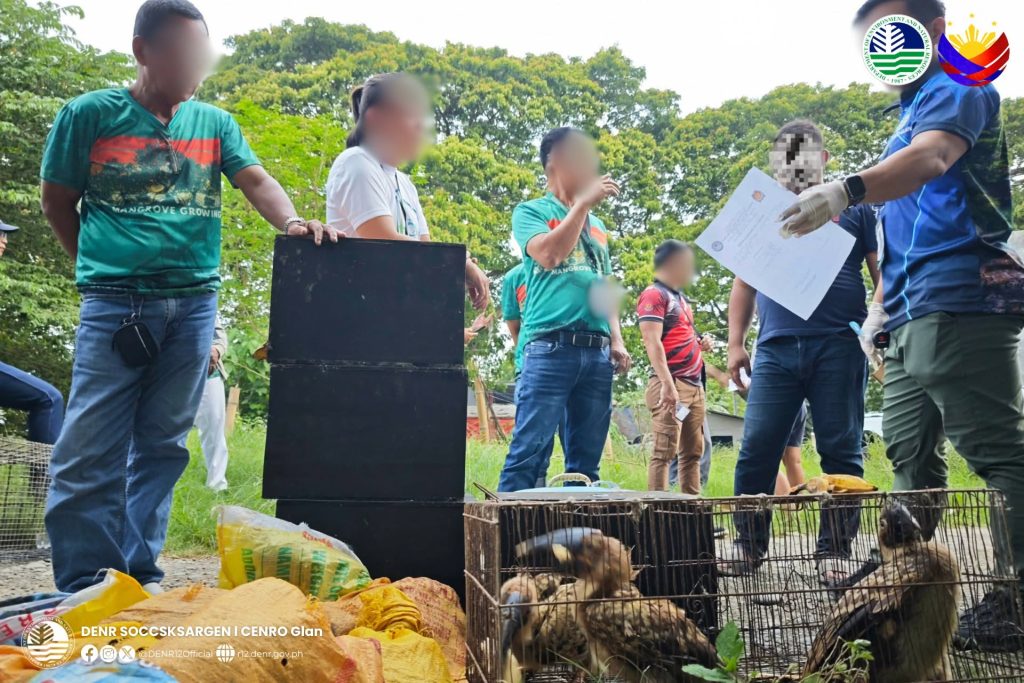
The operation was launched following verified intelligence reports pointing to the illegal transport and trade of wildlife species in the area. Acting on the information, law enforcement and environmental authorities raided a temporary holding facility and residential compound located in Purok Silangan, where they uncovered dozens of wildlife animals confined in wooden transport crates and wire cages.
Authorities said the animals appeared to have been prepared for distribution, raising suspicions of an organized wildlife trafficking operation.
Several male individuals believed to be involved in the illegal activity reportedly fled the area upon the arrival of the enforcement team and remain unidentified. A manhunt and investigation are now underway to determine their identities and possible links to wildlife trafficking networks operating in the region.
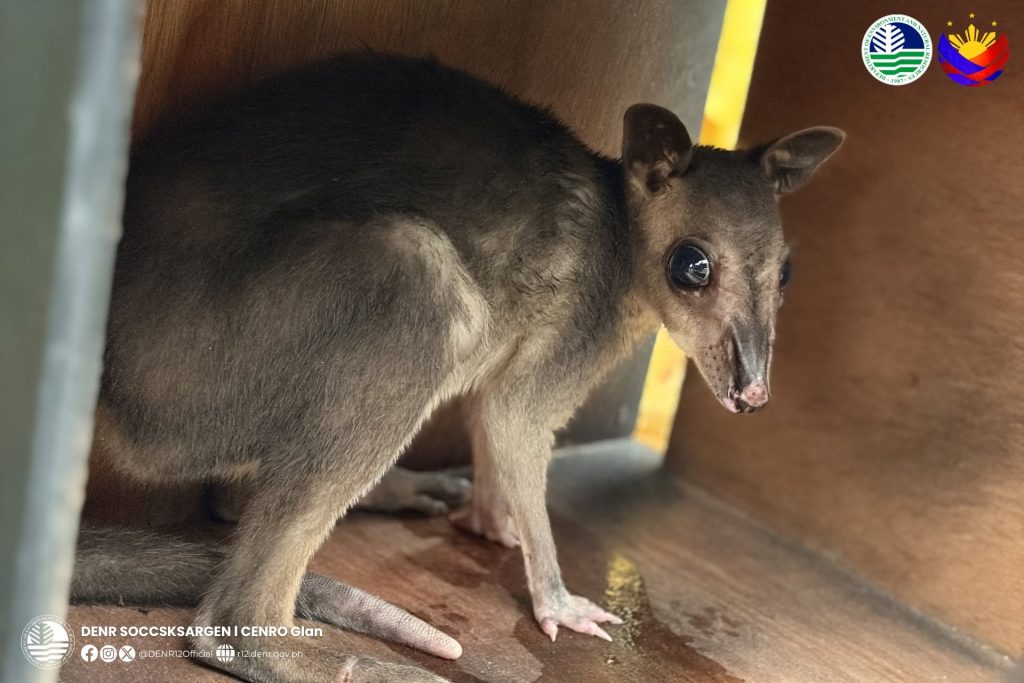
Among the rescued animals were 14 Eclectus Parrots, 18 Black-capped Lories, 11 Victoria or Western Crowned Pigeons, three Wallabies, three Rufous Hornbills, two Sulphur-crested Cockatoos, one Black Lory, and one White-bellied Sea Eagle (Haliaeetus leucogaster).
The White-bellied Sea Eagle is a native Philippine species classified as “Vulnerable” under DENR Administrative Order No. 2019-09, making its illegal possession and trade a serious environmental offense.
Initial investigations revealed that none of the wildlife specimens were accompanied by the permits and documentation required under Republic Act No. 9147, otherwise known as the Wildlife Resources Conservation and Protection Act. Authorities noted that the large number and variety of species recovered, coupled with the use of transport-ready containers, strongly suggested commercial wildlife trading activities.
The enforcement operation was led by the CIDG Sarangani Provincial Office under Police Major Julius A. Vallejo in coordination with the DENR Community Environment and Natural Resources Office (CENRO) of Glan headed by Forester Franklin M. Lebrilla.
Technical identification and assessment of the rescued animals were conducted by Dr. Roy O. Mejorada, Senior Ecosystem Management Specialist of the Protected Area Management Office–Sarangani Bay Protected Seascape (PAMO-SBPS).
Following the inventory, 51 wildlife specimens were turned over to the CIDG Sarangani Provincial Office for safekeeping and documentation as evidence for the filing of criminal charges. The White-bellied Sea Eagle was separately transferred to the Sarangani Environmental Conservation and Protection Center (ECPC) for veterinary examination, rehabilitation, and specialized care.
Authorities later confirmed that the two remaining Wallabies among the confiscated animals did not survive, adding to an earlier Wallaby found dead during the operation. The deaths reduced the number of surviving rescued animals to 50, which are now under government custody and care.
The CIDG Sarangani Provincial Office has committed to pursuing appropriate criminal charges against those responsible for the illegal possession, transport, and trade of wildlife, citing violations of Republic Act No. 9147 and other applicable environmental laws.
Officials emphasized that wildlife trafficking remains one of the major threats to biodiversity conservation, contributing to the decline of vulnerable and endangered species while disrupting ecological balance.
The DENR reiterated its appeal to the public to remain vigilant and report any illegal collection, possession, transport, sale, or trade of wildlife species. Environmental authorities stressed that protecting wildlife is a shared responsibility essential to preserving the country’s rich biodiversity and maintaining healthy ecosystems for future generations.
The successful rescue operation underscores the government’s continuing campaign against wildlife trafficking and highlights the importance of inter-agency cooperation in safeguarding both native and exotic species from illegal exploitation.