
SOUTH UPI, Maguindanao del Sur — In a powerful display of cultural solidarity and community-driven governance, indigenous leaders, government officials, and local stakeholders gathered at the Sulagad Center in Looy, South Upi on May 24 for the “Tulak Sëgamur: Ritual for Oneness and Reassurance of Commitments,” a sacred ceremony symbolizing unity, reconciliation, and renewed cooperation for the Upi Integrated Irrigation Project (IIP).
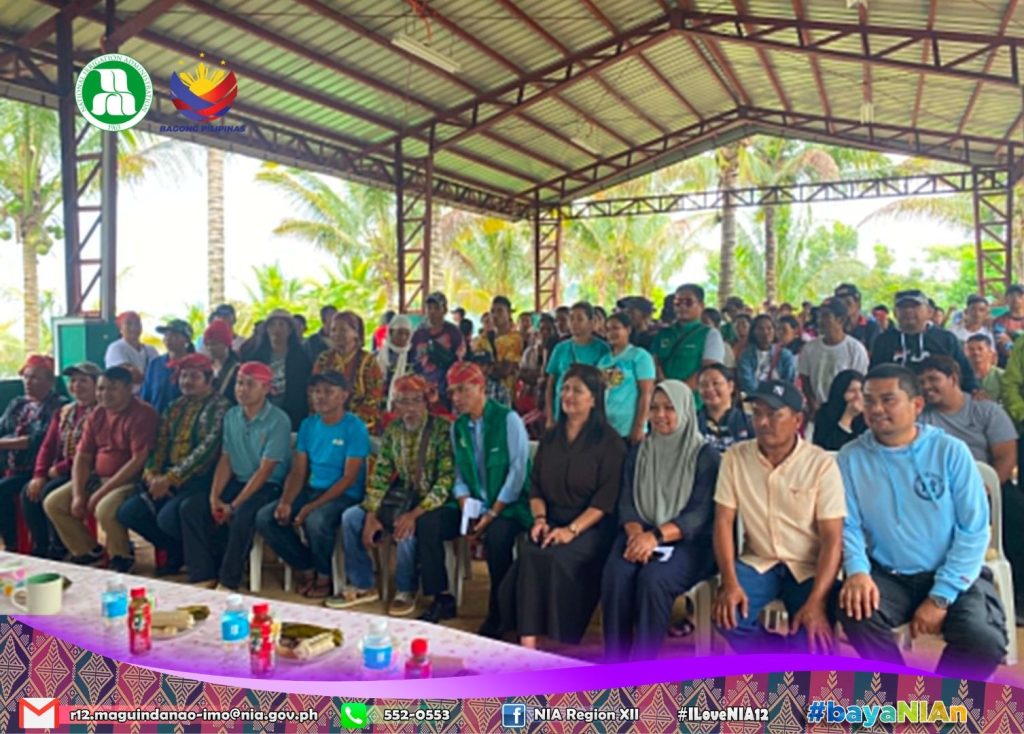
The activity was spearheaded by the Timuay Justice and Governance (TJG) in partnership with the Ministry of Indigenous Peoples’ Affairs of the Bangsamoro Autonomous Region in Muslim Mindanao (MIPA-BARMM) and the National Irrigation Administration–Maguindanao Irrigation Management Office (NIA-MIMO). The gathering marked a significant milestone in the resumption of the Free and Prior Informed Consent (FPIC) process for the irrigation project covering the municipalities of Upi in Maguindanao del Norte and South Upi in Maguindanao del Sur.
More than a ceremonial gathering, the event reflected the continuing effort to harmonize government infrastructure development with the ancestral traditions and cultural rights of Indigenous Peoples (IPs) in the Bangsamoro region.
The Tulak Sëgamur ritual, performed at the Sulagad Ritual Site, served as the centerpiece of the program. Deeply rooted in Teduray indigenous tradition, the ritual symbolizes collective unity, spiritual cleansing, reaffirmation of trust, and mutual accountability among individuals and communities entering into shared commitments.
Representatives from MIPA-BARMM, NIA-MIMO, the local government units of South Upi and Upi, as well as Timuay leaders and community members, participated in the sacred rite. Elders and traditional leaders emphasized that such rituals are not mere symbolic gestures but vital cultural processes that ensure decisions affecting ancestral domains are made with respect, consent, and spiritual guidance.
Following the ritual, participants engaged in a post-ceremony dialogue focused on strengthening cooperation among stakeholders and addressing the importance of maintaining transparency, cultural sensitivity, and inclusivity throughout the implementation of the irrigation project.
Messages of solidarity and support were delivered by key officials, including Hon. Minister Guialal “Teng” Abdulrahman of MIPA-BARMM, Acting Chief of Engineering and Operations Sambai Tuladteg of NIA-MIMO, and TJG Timuay Labi Leticio L. Datuwata. Representatives from the local government units of Looy and Upi also expressed support for the initiative and recognized the importance of ensuring that development programs align with indigenous customs and aspirations.
Officials highlighted that the Upi Integrated Irrigation Project is expected to provide long-term benefits to local farmers by improving agricultural productivity, strengthening food security, and enhancing water access in farming communities. However, they stressed that infrastructure projects within ancestral domains must proceed only through meaningful consultation and with the full participation of indigenous communities.
For the Teduray and Lambangian peoples, the FPIC process is not simply a procedural requirement but a recognition of their right to self-determination and stewardship over ancestral lands. The resumption of the FPIC process through the Tulak Sëgamur ritual underscored the community’s insistence that development should never come at the expense of cultural identity and indigenous governance systems.
Community elders noted that integrating traditional rituals into public decision-making strengthens trust between government institutions and indigenous communities, particularly in areas historically affected by marginalization and conflict.
The ceremony also highlighted the evolving role of indigenous governance mechanisms such as the Timuay Justice and Governance system, which continues to serve as a bridge between traditional leadership structures and modern governance institutions in BARMM.
As the gathering concluded, participants collectively reaffirmed their commitment to sustaining cooperation and ensuring that the implementation of the Upi Integrated Irrigation Project proceeds with respect for ancestral traditions, spiritual guidance, and active community participation.
For many in attendance, the event symbolized more than the continuation of a government project—it represented a shared vision where development and indigenous identity can move forward together, anchored in mutual respect, cultural integrity, and the collective welfare of future generations.