
BAGONG CALARIAN, Zamboanga City — Authorities intercepted two motorized vessels loaded with undocumented cigarettes worth nearly ₱271 million during a maritime security operation in the waters off Datu Odin Sinsuat on March 1, 2026, the Western Mindanao Naval Command (WMNC) reported.
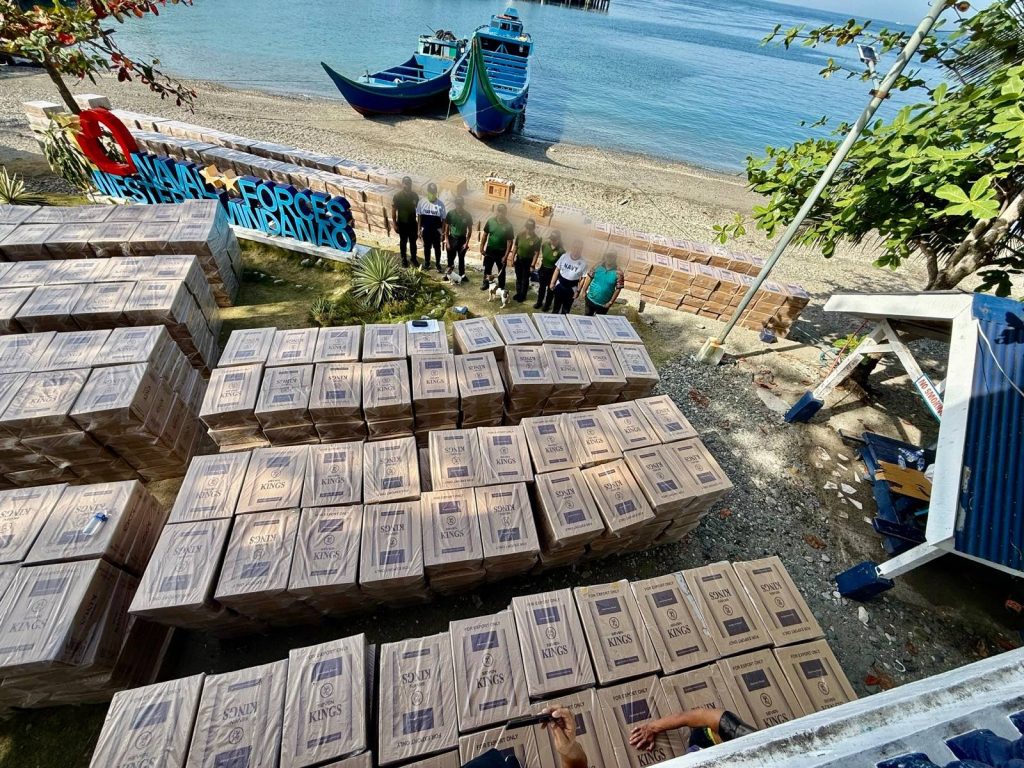
The operation, carried out by units under Naval Task Force 61, took place at around 7:55 p.m. while naval forces were conducting maritime patrol (MARPAT) operations west of Tapian Point. According to the WMNC, personnel detected two unidentified surface contacts roughly three nautical miles from the coastline. The vessels were reportedly operating without navigational lights, prompting authorities to immediately intercept and verify them.
Upon inspection, the vessels were identified as MB Makhfiyyan 5 and MB Makhfiyyan, both described as motorized jungkongs. Initial verification showed that the vessels had departed from Tawi-Tawi and were allegedly bound for Picong in Lanao del Sur.
Naval personnel then conducted a Visit, Board, Search, and Seizure (VBSS) operation, which confirmed the presence of approximately 2,000 master cases of undocumented Seven Kings brand cigarettes onboard the two vessels.
Authorities said the final inventory placed the estimated market value of the seized contraband at ₱270,985,685. Of the total amount, cargo aboard MB Makhfiyyan 5 was valued at ₱216,704,723, while the shipment on MB Makhfiyyan was estimated at ₱54,280,912.
The interception is considered one of the significant anti-smuggling operations conducted in the southern maritime corridor this year, an area frequently monitored by naval forces due to the movement of illegal goods across regional sea routes.
In a statement, the Western Mindanao Naval Command reiterated its commitment to intensifying maritime patrol operations and strengthening coordination with other government agencies to secure the country’s southern maritime borders against smuggling and other unlawful activities.
Officials emphasized that continued maritime security operations are crucial not only for national security but also for protecting government revenue from losses caused by illicit trade.