
While public school students across the Philippines continue to endure cramped classrooms and inadequate facilities, the private sector has once again stepped in to fill the gap left by shrinking government education budgets. In a timely and significant move, SM Foundation, in partnership with SM Prime, launched two new school building projects in Mindanao—proof that the private sector is doing what it can to address a persistent crisis in the country’s public education system.
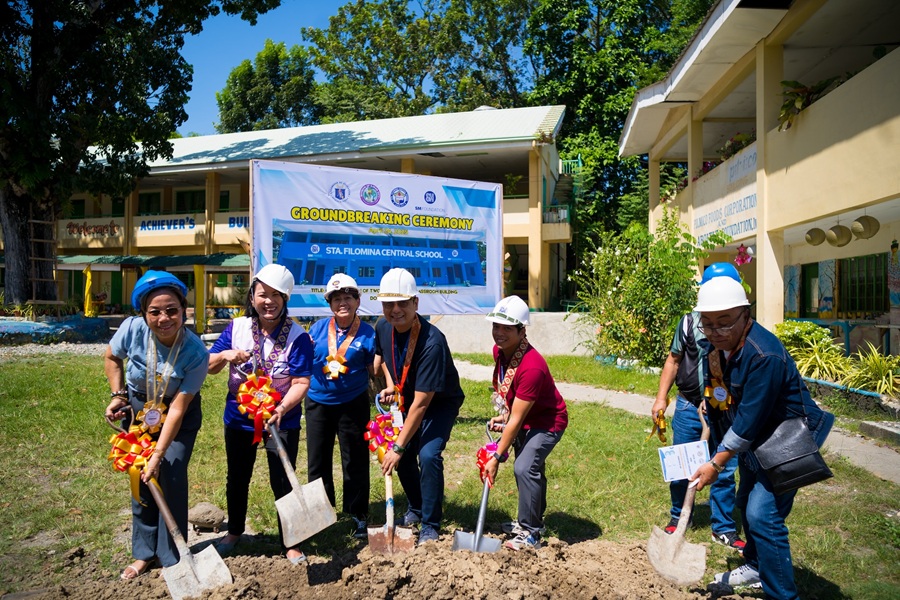
Representatives of SM Prime, SM Foundation, and Department of Education (DepEd) held a groundbreaking ceremony on April 24 at Sta. Filomena Central School in Iligan City, Lanao del Norte
Groundbreaking ceremonies were recently held at Sta. Filomena Central School in Iligan City, Lanao del Norte (April 24) and Suaybaguio-Riña Elementary School in Tagum City, Davao del Norte (April 29). The projects, implemented in collaboration with the Department of Education (DepEd)’s Adopt-A-School Program, are scheduled for completion and turnover by the third quarter of 2025.
These projects are part of SM Foundation’s long-running School Building Program, which is grounded in founder Henry Sy Sr.’s conviction that “education is a great equalizer.” With over 110 school buildings constructed across the country so far, the initiative has helped improve the learning conditions for thousands of Filipino students and teachers.
But the question must be asked: Why is the private sector bearing so much of the burden for something that should be a fundamental government responsibility?
A Shrinking Education Budget
This year, the education budget faced yet another cut, raising concerns among educators and education advocates. The reduction comes at a time when the public education system is already under severe strain—from a lack of classrooms and teaching materials to overcrowded classes and the continued shortage of qualified teachers. In some areas, it is not uncommon to find classes of over 60 students crammed into a single room, often with broken chairs, poor ventilation, and insufficient learning tools.
Despite constitutional mandates that place education as a top national priority, budget allocations suggest otherwise. While massive funds are poured into infrastructure, military modernization, and discretionary spending, critical social services such as education are sidelined.
“If not for private sector help like this, we don’t know how we could accommodate all our students,” a local school official in Iligan City remarked during the groundbreaking ceremony. “The classrooms are no longer enough, especially as enrollment continues to grow.”
The Role of the Private Sector: Complementary, Not Substitutive
Corporate social responsibility (CSR) efforts, like those of SM Foundation, play a vital role in uplifting public education. Their initiatives help bridge gaps, especially in underserved and remote communities. However, these efforts should be complementary—not substitutive—to what should be a robust and adequately funded public education system.
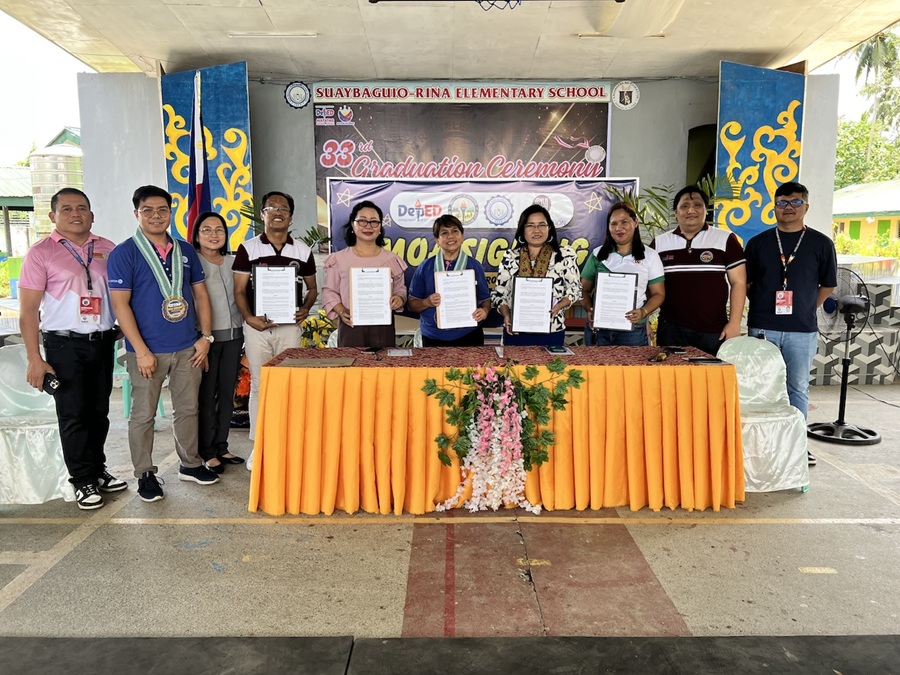
SM Foundation signs a memorandum of agreement with DepEd at a ceremony on April 29 at Suaybaguio-Riña Elementary School in Tagum City, Davao del Norte
Relying too heavily on private donations and CSR projects to build classrooms sets a dangerous precedent. It creates a patchwork solution to a systemic problem, and ultimately, it is the youth—especially those in the poorest communities—who pay the price.
Rethinking National Priorities
The government must reassess its priorities. While infrastructure development and defense are important, so too is investing in the future of the nation through education. Classrooms are not just buildings; they are spaces where children build dreams, where teachers shape lives, and where communities are empowered.
If the private sector can see the value in investing in education, why can’t the state match that commitment?
As SM Foundation and other like-minded organizations continue to invest in Filipino youth, their efforts highlight both the power of private initiative and the urgent need for government accountability. With the right political will, partnerships between the public and private sectors could transform not just classrooms—but the country itself.