
The Philippine Institute of Volcanology and Seismology (PHIVOLCS) has once again emphasized that earthquakes remain unpredictable, urging the public to stay alert and prepared at all times.
“Marami-rami rin tayong mga active faults na pwedeng gumalaw anytime, anywhere pero hindi natin masasabi kung kailan at anong oras,” said Nane Danlag, Officer-in-Charge of the PHIVOLCS General Santos City Station, during a recent press conference on Earthquake Preparedness 2025.
(“We have several active faults that can move at any time and anywhere, but we cannot determine exactly when.”)
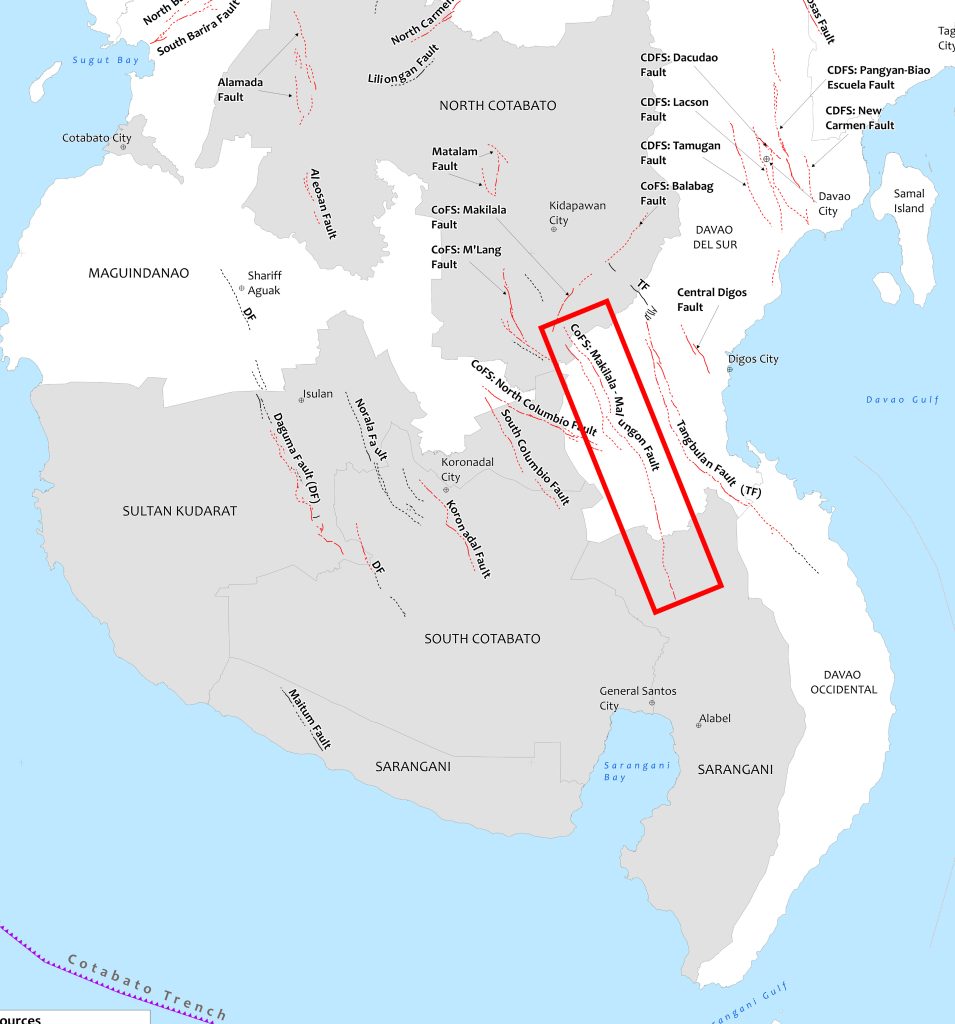
Danlag identified the Makilala-Malungon Fault as the most potentially hazardous in Region 12, capable of producing a magnitude 7.2 earthquake—referred to as the “Big One.”
Other active faults in the region include:
- North Cotabato Fault – potential magnitude 6.8
- South Columbio Fault – potential magnitude 6.8
- M’lang Fault – potential magnitude 6.8
- Makilala Fault – potential magnitude 6.5
- Balabag Fault – potential magnitude 6.4
Danlag stressed that PHIVOLCS cannot determine the exact time, date, or location of any future earthquake.
“To clarify, there is still no existing technology—locally or globally—that can predict when and where an earthquake will happen, including its depth or epicenter,” she explained.
The press conference was organized by the Regional Disaster Risk Reduction and Management Council (RDRRMC) through the Office of Civil Defense (OCD) in Region 12. It underscored the importance of a whole-of-society approach to disaster preparedness, especially in the context of earthquake risk.
OCD Regional Director Raylindo Aniñon highlighted that the press conference is part of efforts that go “above and beyond” the regular National Simultaneous Earthquake Drill (NSED).
“In this earthquake preparedness press conference, we are committed to exceeding what we usually do in the NSED,” Aniñon said.
He announced that the upcoming NSED will transition into a “functional exercise” designed to test the actual readiness of RDRRMC member agencies, local governments, and other disaster response groups in the region.
Aniñon emphasized the importance of collaboration across sectors—including government agencies, LGUs, NGOs, and the media—to ensure that preparedness efforts reach communities and empower them to respond effectively.
Meanwhile, Dr. Bong Dacera Jr., Head of the General Santos City Disaster Risk Reduction and Management Office (DRRMO), recognized the critical role of the media in raising public awareness.
“The media plays a vital role in preparing communities,” Dacera said, urging media practitioners to continue helping combat misinformation and fake news on social media and other platforms.