
The long-delayed Tampakan Copper-Gold Project is moving closer to commercial production, with its proponents targeting operations within the next two to three years. Road construction and other preparatory activities are already underway, according to SM Investments Corp. President and CEO Frederic DyBuncio, who said the group is aiming to bring the project into operation by 2028. Once operational, Tampakan is projected to produce an average of 375,000 metric tons of copper and 360,000 ounces of gold in concentrate annually over a 17-year mine life.
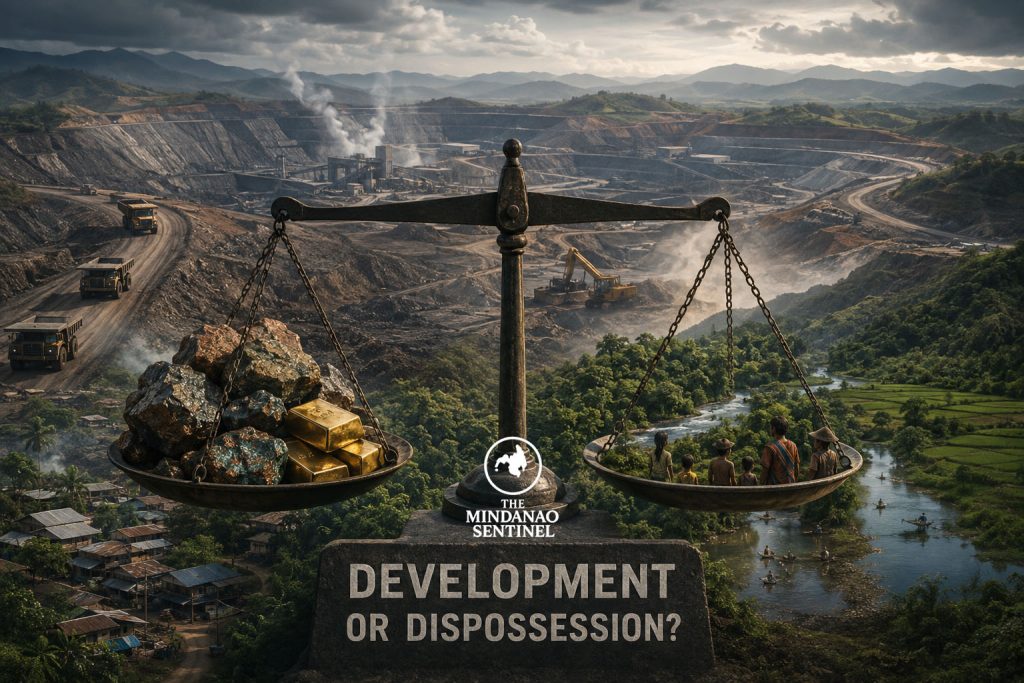
There is little question that the project could generate significant economic activity. It could bring investment into South Cotabato and neighboring areas, create employment, expand business opportunities, generate revenues for government and strengthen the country’s position in the regional copper market. For communities that have lived for decades with limited employment opportunities, inadequate infrastructure and persistent rural poverty, the prospect of a major investment is understandably attractive.
But as Tampakan moves from years of controversy and preparation toward actual operation, the public discussion must become broader than the projected value of the minerals beneath the ground. The central issue is no longer simply whether the project can generate economic growth. The more difficult question is whether that growth will produce lasting prosperity for the communities that live around the mine—or whether investors and government will capture most of the immediate economic gains while communities carry environmental and social risks that could remain long after the copper and gold have been extracted.
That question becomes even more important because Tampakan is not an isolated industrial site. Its potential impact extends across a much larger landscape, from the mountain ridges where mining activities are concentrated to the watersheds, farms, rivers and downstream communities that depend on them.
Beyond the Mine Footprint
What happens on the ridge can eventually affect what happens in the valley. What happens in the watershed can affect agriculture, and what happens in the river can affect communities downstream. From there, environmental changes can extend into the broader ridge-to-reef system. This interconnectedness makes it impossible to assess Tampakan solely by measuring the physical footprint of the mine.
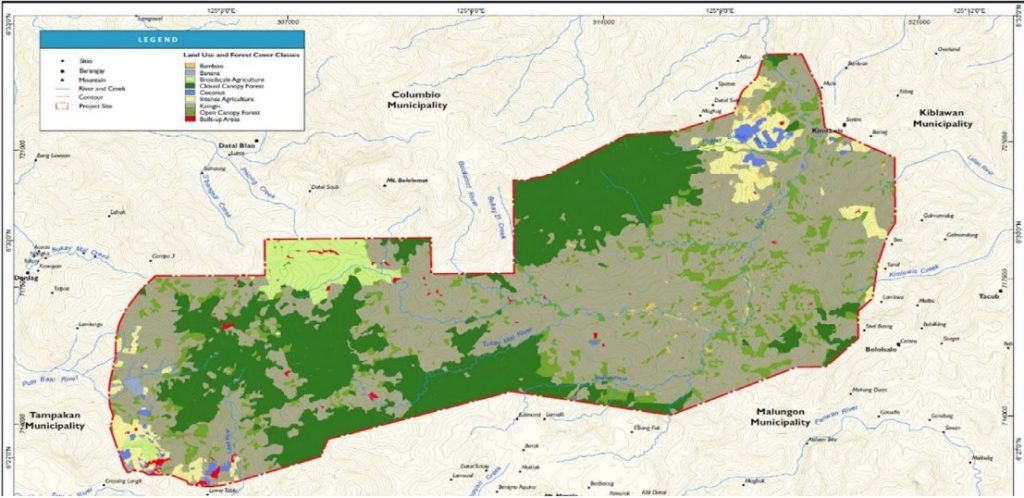
The project sits at the headwaters of five critical watersheds spanning South Cotabato, Sultan Kudarat, Sarangani and Davao del Sur. These watersheds support forests, agricultural areas, irrigation systems and rivers that sustain communities beyond the immediate mining area. Scientific findings presented during the May 2026 Tampakan Water Forum reported approximately 3,306 hectares of net forest loss across the five watersheds between 2000 and 2020. The Mal Basin, where much of the planned mining infrastructure is expected, recorded the steepest forest decline while also facing exposure to drought, flooding and landslides.
For farmers, these are not simply environmental indicators. Changes in forest cover and watershed conditions can affect water availability, soil stability and agricultural productivity. For downstream communities, watershed degradation can increase vulnerability to flooding and landslides. For local governments, environmental deterioration can eventually translate into higher costs for disaster response, infrastructure protection, water supply and rehabilitation.
This is where the economic calculation surrounding Tampakan becomes complicated. The value of copper and gold can be measured in market prices, projected production and corporate revenues. The value of a functioning watershed is much more difficult to place in a financial statement, even though that watershed may be providing essential economic services every day.
Forests retain water, stabilize soils and help regulate the movement of water through the landscape. Rivers supply communities and farms. Healthy watersheds contribute to agricultural productivity and reduce certain disaster risks. These services have economic value even when no one directly pays for them.
Once those systems are degraded, however, somebody has to pay. Farmers may need additional irrigation. Communities may require alternative sources of water. Governments may have to spend more on flood control and disaster response. Agricultural productivity can decline. Rehabilitation can require years of public and private expenditure.
The danger is that the economic benefits of mining are highly visible while the economic costs of environmental degradation may be dispersed, delayed and difficult to calculate. If the accounting counts the investment, jobs, taxes and mineral production but does not adequately account for the loss of ecological services, then the country risks measuring only half of the project’s real economic impact.
The 17-Year Mine and the Generations That Remain
The projected 17-year mine life also raises a fundamental question about the distribution of benefits and costs over time.
Seventeen years can transform an economy, but it is relatively short in the life of a watershed and extremely short in the history of a community. The mine will eventually reach the end of its productive life. The copper and gold will be removed, investors will seek returns on their capital and the companies involved can eventually redirect investments toward other projects.
The communities, however, will remain.
Farmers cannot move a watershed. Indigenous communities cannot simply transfer ancestral landscapes to another location without consequences for culture, identity and livelihoods. Downstream communities cannot simply replace a river if its ecological condition deteriorates.
This creates one of the fundamental inequalities of extractive development: capital is mobile, but communities and ecosystems are largely not.
That does not mean mining should automatically be rejected. It means the economic benefits must be measured against the full duration of the project’s consequences. A mine that operates for 17 years but leaves environmental liabilities that persist for decades cannot be considered solely on the basis of what it produces during its productive years.
The more important measure is what remains when production ends.
If mining revenues have helped create sustainable local economies, improved education and health, strengthened local institutions, diversified livelihoods and protected natural resources, the project would leave behind assets capable of supporting communities after mine closure.
If, on the other hand, communities become economically dependent on mining while their agricultural and environmental foundations deteriorate, the region could face a difficult transition once the mine’s economic engine slows or disappears.
Mining in a Climate-Vulnerable Landscape
The climate crisis makes this issue even more consequential.
The watersheds surrounding the project have reportedly been identified as highly vulnerable to agricultural drought, while climate projections cited during the Tampakan Water Forum indicate that portions of South Cotabato, Sultan Kudarat, Sarangani and Davao del Sur could experience temperature increases exceeding 3 degrees Celsius under worst-case scenarios.
In such a landscape, forests and watersheds should increasingly be viewed not only as environmental resources but as climate-resilience infrastructure.
A watershed capable of retaining and regulating water becomes more valuable as droughts intensify. Forest cover becomes more important as communities confront erosion, landslides and extreme rainfall. Agricultural land becomes increasingly strategic as food production faces climate pressures.
This creates an uncomfortable challenge for policymakers. Communities are being encouraged to become more resilient to climate change at precisely the same time that a major extractive project is being advanced within a landscape already exposed to drought, flooding and landslide risks.
Modern mining technologies, engineering measures and environmental safeguards can reduce some impacts. That is an important consideration, and the environmental performance of the actual operation should ultimately be judged on evidence rather than assumptions.
But mitigation is not the same as elimination.
The relevant question is therefore not simply whether environmental impacts can be mitigated under present conditions. It is whether the project’s safeguards remain adequate as climate conditions become more extreme and the surrounding watersheds become increasingly stressed.
Who Carries the Risk?
The distribution of risk deserves the same attention as the distribution of economic benefits.
Mining companies and investors can make money from the project. Government can collect revenues. Workers can earn wages. Local businesses can gain customers. These are tangible benefits.
But environmental risks are often distributed differently.
If an extreme rainfall event damages infrastructure, if sediment affects waterways, if agricultural productivity declines or if rehabilitation does not produce the results expected, the consequences may be felt by communities that have little control over the operation.
That is why questions about financial guarantees, rehabilitation and long-term liability should be resolved before production begins.
The public should not ultimately become the insurer of private mining profits. If a project is capable of generating substantial private returns, its proponents should also have sufficient financial capacity and legally enforceable obligations to prevent, mitigate and repair environmental damage.
The principle is straightforward: the greater the potential private benefit, the stronger the mechanisms should be to ensure that potential public costs do not become an afterthought.
The Communities Cannot Be Measured Only as Beneficiaries
The social question is equally important, particularly for Indigenous communities whose ancestral territories are connected to the project.
Tampakan has never been a story in which every affected community holds the same position. Some Indigenous leaders and communities have supported the project, seeing mining as a possible source of jobs, infrastructure and economic opportunity. Others have continued to oppose it because of concerns over ancestral land, environmental protection, livelihoods and the long-term consequences of mining.
Both realities exist.
That division should not be reduced to a battle between people who want development and people who oppose development. Communities can simultaneously want economic opportunity and demand environmental protection. They can want better roads, schools and employment while also wanting their water sources and ancestral lands protected.
This is why Free, Prior and Informed Consent must be treated as more than a procedural requirement. Communities need access to sufficient information to understand the project’s risks and benefits and must be able to participate meaningfully in decisions affecting their lands and livelihoods.
Dissenting voices should also be treated as part of the consultation process rather than as obstacles to development.
Transparency Will Determine Trust
The project’s credibility will ultimately depend heavily on transparency.
Civil society organizations and researchers have raised concerns over access to environmental documents, including reported efforts to obtain environmental assessments through Freedom of Information requests. If a project is environmentally defensible, transparency should strengthen rather than weaken public confidence.
Independent experts should be able to examine the scientific assumptions behind the project. Communities should be able to understand potential impacts on their water and livelihoods. Government regulators should be subject to public scrutiny over how environmental risks are assessed and monitored.
Environmental information becomes a matter of public interest when the consequences of a project extend beyond the company operating it.
Transparency should therefore not be regarded as an obstacle to investment. It is part of the social license required for a project of this scale.
The Question After the Mine Closes
Ultimately, Tampakan should be judged not only by what it produces but by what it leaves behind.
It is relatively easy to calculate how many tons of copper and ounces of gold will be produced, how much investment will enter the region, how many workers will be employed and how much revenue will be collected.
It is much harder—but more important—to determine whether communities will be stronger after the mine closes.
Will farmers have more resilient livelihoods? Will Indigenous communities have sustainable sources of income beyond mining? Will local governments have stronger institutions and better services? Will infrastructure serve communities even after mining operations end? Will forests and watersheds remain capable of supporting agriculture and downstream communities? Will the region have developed other industries that can sustain its economy after the mine’s productive life?
These are the measures that will determine whether Tampakan becomes lasting development or simply a successful period of mineral extraction.
A mining project can boost an economy without necessarily transforming its underlying poverty. It can create employment without creating long-term economic independence. It can generate government revenues without guaranteeing that those revenues will be converted into sustainable community assets.
That is why the distribution of wealth matters as much as the size of the wealth created.
From Ridge to Reef
The strongest case for taking the Tampakan debate seriously is that the project involves more than a mining company, its investors and the government.
It involves an entire landscape.
From the ridge to the watershed, from the watershed to the farms, from the farms to the rivers and from the rivers toward downstream and coastal ecosystems, communities are connected to the same environmental system.
The mineral deposit beneath the ground has an enormous monetary value. But the forests, watersheds, farms and rivers above it also have economic value, even if that value is not traded on a stock exchange.
The challenge for government and mining proponents is therefore not merely to demonstrate that Tampakan can operate profitably. It is to demonstrate that the economic benefits can be distributed fairly and that the environmental risks can be contained, monitored and financed over the full life of the project and beyond.
Investors are entitled to earn returns. Government is entitled to collect revenues. Workers are entitled to jobs. Communities are entitled to development.
But communities are also entitled to water, healthy ecosystems, secure livelihoods and protection from environmental liabilities that could outlive the companies and investors that benefit from the mine.
The Tampakan project is projected to operate for 17 years. The people living in the affected landscape will remain for generations.
That is why the ultimate measure of the project should not be how much copper and gold can be extracted during those 17 years. It should be whether, after the last shipment leaves Mindanao, the communities from ridge to reef are left with a stronger economy, protected watersheds, sustainable livelihoods and an environment capable of sustaining the next generation.
If the wealth generated by Tampakan can achieve that, then mining could become part of a broader development story.
If the profits are privatized while the environmental risks are left for communities and future generations to manage, then the country will have to confront a much harder conclusion: that what was called development may have been little more than the extraction of wealth from one generation’s landscape at the expense of the next.