
The growing crisis of marine pollution once again came into sharp focus as the Department of Environment and Natural Resources (DENR), together with environmental advocates, scuba divers, local governments, and community volunteers, removed hundreds of kilograms of trash from coastal waters and shorelines in Mindanao during simultaneous coastal clean-up and SCUBASurero activities held in celebration of the 2026 Month of the Ocean.

From the protected islands of Zamboanga Peninsula to the coastal communities of Sarangani Province, environmental workers and volunteers recovered massive amounts of garbage from both shorelines and underwater ecosystems — a grim reminder of the worsening threats facing the country’s oceans and marine biodiversity.
In Western Mindanao, the DENR IX led simultaneous Coastal Clean-Up and SCUBASurero operations on May 21 at the Great and Little Sta. Cruz Island Protected Landscape and Seascape in Sta. Cruz Island, Zamboanga City, and Triton Island in Vincenzo Sagun, Zamboanga del Sur.
The large-scale environmental effort gathered 92 volunteers from various government agencies, environmental offices, security forces, and local communities, highlighting the growing urgency for collective action to protect the country’s marine ecosystems.
Participating groups included personnel from the Community Environment and Natural Resources Office (CENRO) Zamboanga City, Provincial Environment and Natural Resources Office (PENRO) Zamboanga del Sur, CENRO Guipos, the Environmental Management Bureau (EMB), Office of the City Environment and Natural Resources (OCENR), the Army Detachment, SCPO, and local community representatives.


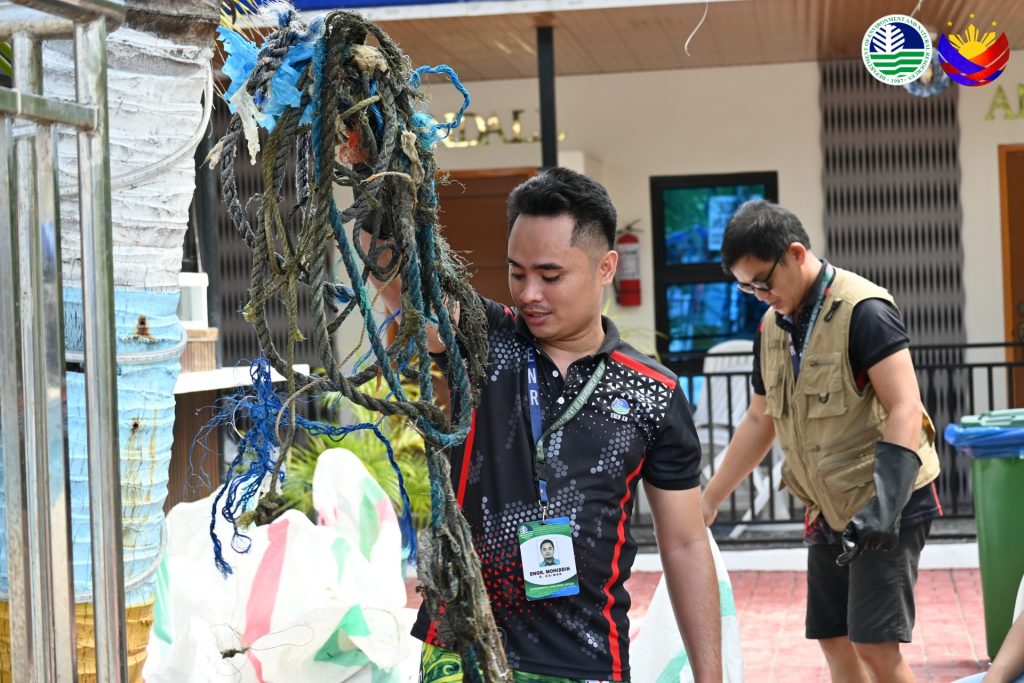
During the operation at Sta. Cruz Island, volunteers collected 95 kilograms of coastal waste and retrieved another 42 kilograms of underwater debris through the SCUBASurero dive operations. The wastes included plastic bottles, sachets, styrofoam, food wrappers, fishing lines, diapers, and other non-biodegradable materials that continue to choke marine habitats and endanger aquatic life.
Meanwhile, at Triton Island, volunteers gathered 62 kilograms of shoreline waste while additional underwater litter was recovered by scuba divers. Among the retrieved materials were glass and plastic bottles, foam buoys, fishing lines, food containers, and various plastic debris commonly found polluting coastal ecosystems.
At the same time in Sarangani Province, DENR XII, together with 11 partner organizations and volunteers, conducted another major SCUBASurero and coastal clean-up operation in the coastal waters and shoreline of Maasim.
The activity mobilized around 80 participants and resulted in the retrieval of more than 100 kilograms of marine waste, filling 24 sacks of assorted garbage collected from underwater and coastal areas. Retrieved wastes included plastic materials, discarded packaging, fishing-related debris, and other pollutants that pose serious threats to coral reefs, fisheries, and marine biodiversity.
The collected trash was later turned over to the local government’s waste management personnel for proper disposal.
DENR officials emphasized that the clean-up drives are not merely ceremonial activities for the Month of the Ocean but urgent interventions against a worsening environmental problem that continues to affect coastal communities, fisheries, tourism areas, and marine wildlife.
DENR IX OIC Regional Executive Director Marie Angelique C. Go expressed gratitude to volunteers and scuba divers who participated in the operations, stressing that protecting marine ecosystems is a shared responsibility.
“We extend our heartfelt gratitude to all volunteers, participants, and our dedicated Scubasureros for their invaluable efforts in protecting our coastal and marine ecosystems. Your participation reflects our shared responsibility in sustaining healthy oceans and safeguarding marine life for future generations,” Go said.
Environmental advocates warned that the volume of waste collected during just a single day of operations reflects the alarming scale of marine pollution entering Philippine waters daily. Plastic waste, abandoned fishing gear, disposable packaging, and other non-biodegradable materials continue to accumulate in coastal areas, threatening coral reefs, fish populations, sea turtles, and other marine species.
Experts also stressed that clean-up drives alone are not enough if communities, industries, and local governments fail to address the root causes of ocean pollution, including improper waste disposal, excessive plastic consumption, weak enforcement of environmental laws, and inadequate solid waste management systems.
This year’s Month of the Ocean celebration carries the theme, “Sustaining Ocean Health, Sailing Towards a Resilient Nation,” a message environmental groups say must translate into stronger policies, stricter environmental enforcement, and long-term community participation to prevent further degradation of the country’s marine ecosystems.
As volunteers hauled sacks of trash from coastlines and divers emerged from the sea carrying debris from the ocean floor, the message from the operations was unmistakable: the battle to save the oceans can no longer wait, and protecting the country’s marine resources requires urgent and sustained action from every sector of society.