
The recent decision of the Regional Trial Court in Koronadal City affirming the extension of the Financial or Technical Assistance Agreement (FTAA) for the Tampakan Copper-Gold Project has once again pushed one of the Philippines’ most controversial mining ventures back into the national spotlight.
For supporters of the project, the ruling represents a victory for economic development, investor confidence, and long-delayed opportunities in Mindanao. For critics, however, it signals a dangerous step toward environmental disruption, intensified climate vulnerability, and the possible irreversible transformation of one of Mindanao’s most ecologically sensitive landscapes.
The debate over Tampakan has always been framed as a battle between development and environmental protection. But reducing the issue to a simple “jobs versus forests” argument misses the deeper reality: the Tampakan issue is fundamentally about what kind of development the Philippines is willing to pursue in an era of climate crisis, ecological instability, and growing demands for transparency and accountability.
At stake is not merely a mining permit. At stake are watersheds, food systems, Indigenous ancestral domains, biodiversity corridors, and the long-term resilience of entire provinces in Mindanao.
The Tampakan Copper-Gold Project, operated by Sagittarius Mines, Inc., is often described as Southeast Asia’s largest untapped copper-gold reserve, with estimated deposits reportedly valued at over US$200 billion. Supporters argue that unlocking these reserves could generate billions in taxes, infrastructure investments, employment opportunities, and local economic growth.
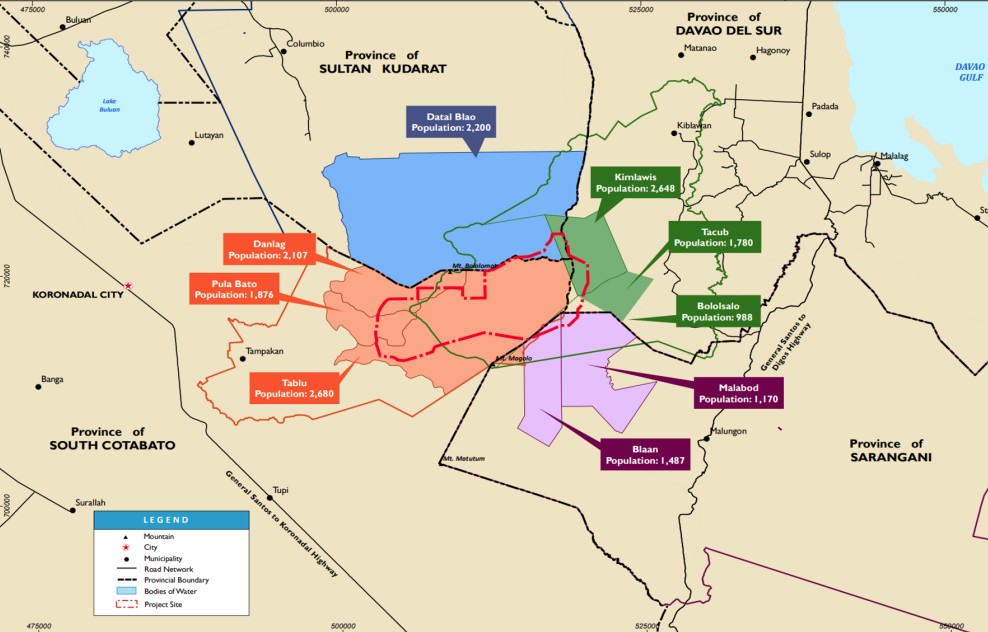
Indeed, many local officials, business groups, and some members of the Blaan and T’boli communities have openly expressed support for the project. Some Indigenous leaders have signed Free and Prior Informed Consent (FPIC) agreements, while others see mining as a pathway out of poverty in historically marginalized upland communities.
These perspectives cannot simply be dismissed. Mindanao continues to struggle with underdevelopment, lack of infrastructure, limited investments, and rural poverty. It is understandable why many residents see the Tampakan project as a symbol of long-awaited economic transformation.
Yet the critical question remains: development for whom, and at what cost?
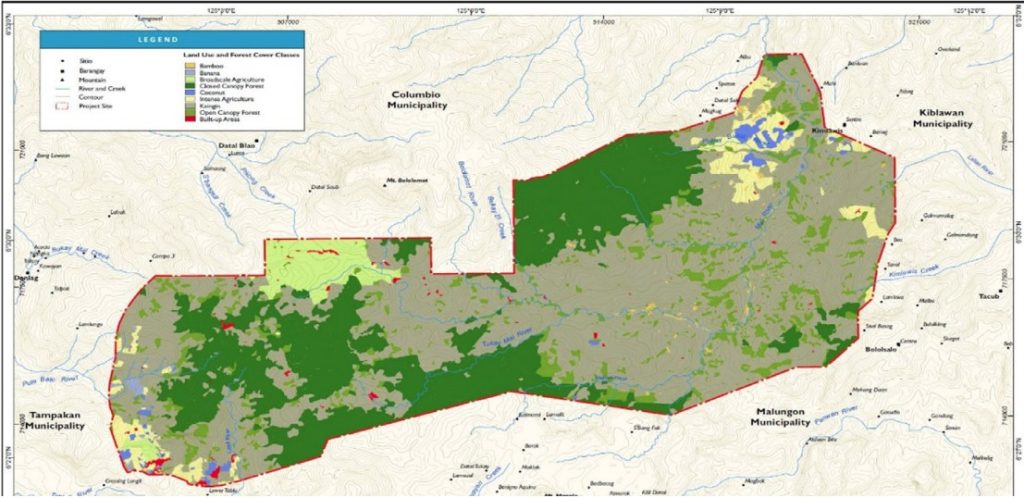
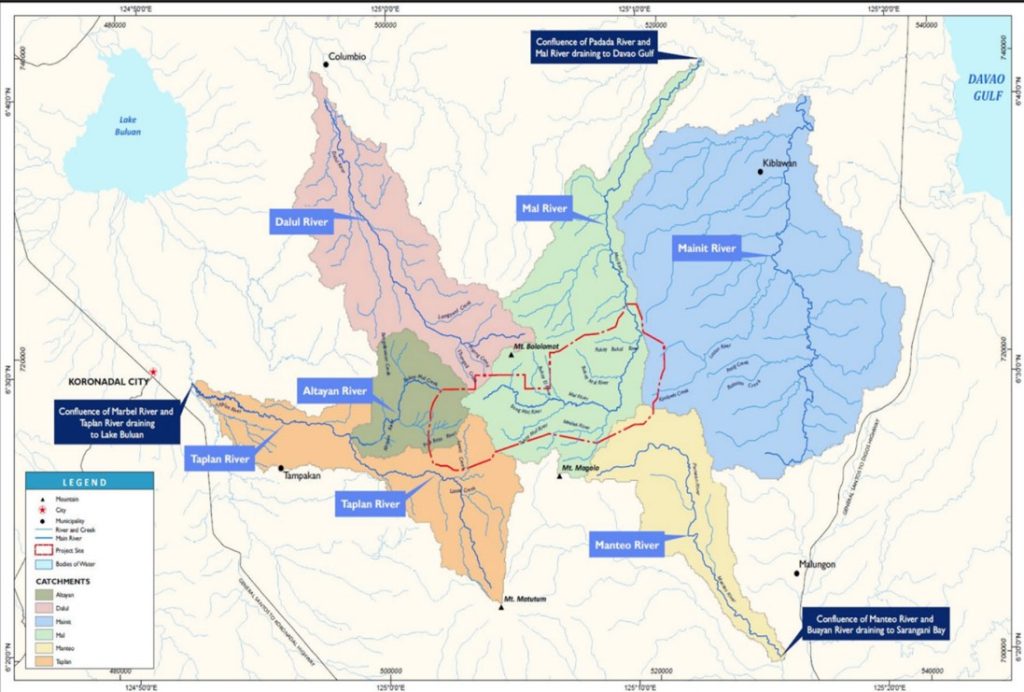
The mine site sits at the headwaters of five critical watersheds spanning South Cotabato, Sultan Kudarat, Sarangani, and Davao del Sur. These watersheds sustain farms, irrigation systems, forests, rivers, and downstream communities across multiple provinces.
Scientific findings presented recently by researchers from institutions including the Ateneo de Davao University, University of Southern Mindanao, Ateneo de Manila University, and University of the Philippines paint a deeply troubling picture.
Satellite-based assessments show a net forest loss of 3,306 hectares from 2000 to 2020 across the five watersheds surrounding the mining area. The Mal Basin, which hosts much of the planned mining infrastructure, recorded the steepest forest decline while simultaneously facing high exposure to drought, flooding, and landslide hazards.
These are not abstract environmental concerns. They are direct threats to agriculture, water security, disaster resilience, and rural livelihoods.
Even more alarming is that nearly 90 percent of these watersheds are reportedly vulnerable to agricultural drought. Climate projections from PAGASA and the Manila Observatory indicate that South Cotabato, Sultan Kudarat, Sarangani, and Davao del Sur could experience temperature increases exceeding 3°C under worst-case climate scenarios.
In a warming climate, watersheds become even more valuable. Forests become even more essential. Water systems become even more fragile.
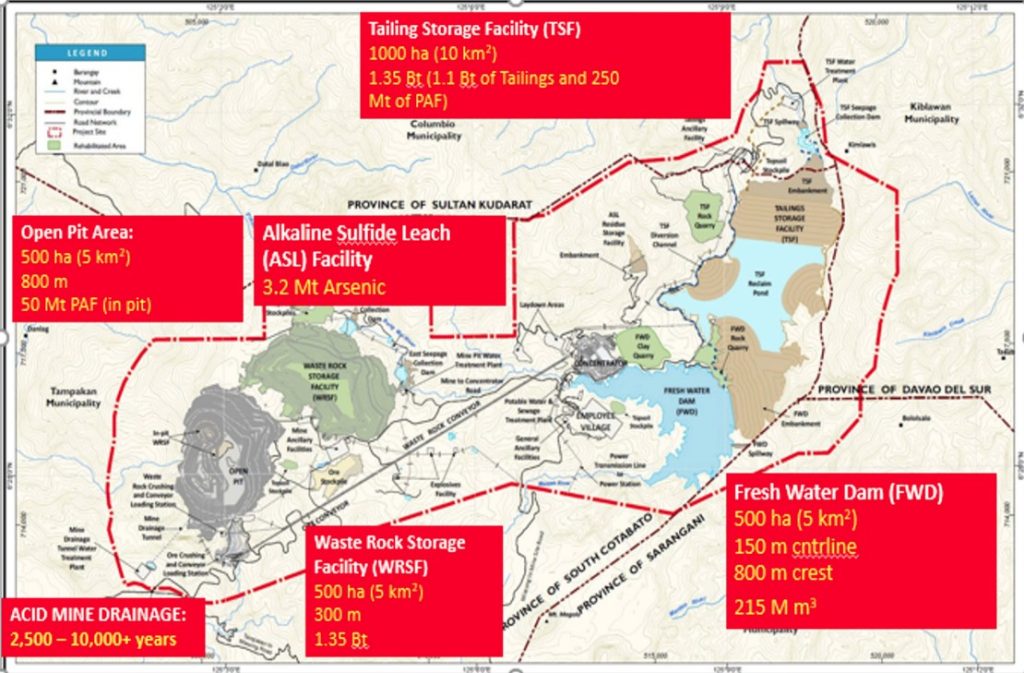
And yet the proposed mining method remains open-pit mining — a method explicitly banned under the 2010 Environmental Code of South Cotabato.
This contradiction lies at the heart of the controversy.
If open-pit mining remains prohibited at the provincial level, how can a project dependent on open-pit extraction proceed without undermining local environmental governance? If the project moves forward despite local opposition and legal restrictions, what message does that send about local autonomy and environmental protections?
Equally concerning is the persistent lack of transparency surrounding the project’s Environmental Impact Statement (EIS) and related environmental documents.
Civil society organizations and researchers have repeatedly sought access to these reports through Freedom of Information requests, only to be denied. If the project is truly safe, sustainable, and scientifically defensible, why withhold environmental assessments from public scrutiny?
Transparency is not an inconvenience. It is a democratic obligation.
Communities that stand to lose water sources, farms, forests, and livelihoods deserve full access to scientific data that may determine their future. Public consultation cannot be meaningful if critical information remains inaccessible.
The government and mining proponents argue that modern mining technologies and mitigation measures can reduce environmental impacts. That may be true to some extent. Mining today is not identical to the destructive practices of previous decades.
But history offers painful reminders that environmental assurances often collapse under economic pressure, weak regulation, disasters, or corporate neglect. Across the Philippines, abandoned mines, tailings spills, silted rivers, and devastated ecosystems continue to haunt communities long after mining companies have left.
Mindanao itself carries scars from extractive industries that promised prosperity but delivered environmental degradation and social conflict.
The Tampakan project also raises difficult questions about climate justice.
The Philippines contributes minimally to global carbon emissions, yet it remains among the countries most vulnerable to climate change. At a time when communities are already experiencing stronger typhoons, prolonged droughts, crop failures, and water insecurity, pursuing a massive open-pit mine within climate-vulnerable watersheds appears increasingly contradictory.
The economic value of extracted copper and gold is easy to calculate. The value of intact forests, healthy watersheds, biodiversity, flood control, carbon storage, and food security is far more difficult to quantify — yet potentially far more important in the long term.
Researchers involved in the watershed studies estimated losses amounting to billions of pesos in climate regulation services due to deforestation and land-cover changes. Those figures should force policymakers to rethink how economic “progress” is measured.
GDP growth and mining revenues may rise in the short term. But what happens if downstream agriculture suffers? What happens if flooding intensifies? What happens if drought reduces irrigation capacity? What happens if water systems become contaminated or degraded?
The burden of those consequences will not fall equally. It will be carried mostly by farmers, Indigenous communities, fisherfolk, and rural poor families — the same sectors often promised economic salvation through mining.
This does not mean all mining should automatically be rejected. Copper, after all, remains essential for renewable energy technologies, electric vehicles, and modern infrastructure. The world’s energy transition will require minerals.
But that reality does not excuse weak safeguards, opaque processes, or insufficient environmental scrutiny.
If the Tampakan project is to proceed, it must face the highest possible standards of environmental accountability, climate risk assessment, Indigenous rights protection, and public transparency. Not minimum standards. Maximum standards.
That includes:
- Full public disclosure of environmental impact studies;
- Independent scientific review of watershed and climate risks;
- Transparent consultation processes with all affected communities;
- Strong guarantees for water protection and rehabilitation;
- Legally enforceable accountability mechanisms;
- Genuine respect for dissenting Indigenous voices, not only supportive ones;
- And rigorous evaluation of whether the long-term ecological costs outweigh projected economic gains.
The RTC ruling may have favored the FTAA extension, but legality alone does not settle the moral, ecological, and social questions surrounding Tampakan.
Courts can decide whether procedures were followed. They cannot decide what kind of future Mindanao deserves.
The Tampakan issue should not divide communities into simplistic camps of “pro-development” and “anti-development.” Many of those opposing the project are not against progress. They are asking whether true progress can exist if rivers dry up, forests disappear, landslides worsen, and communities lose ecological security.
The Philippines has reached a point where development choices can no longer ignore climate science and ecological limits.
Mindanao’s future cannot rely solely on extracting what lies beneath the ground while risking the systems that sustain life above it.
The challenge now facing government leaders, mining firms, civil society, and affected communities is not merely whether the Tampakan project can proceed legally.
The real question is whether it can proceed responsibly — without sacrificing the watersheds, forests, farms, and communities that future generations will depend on long after the gold and copper are gone.
Note: The data, scientific findings, and ecological assessments cited in this piece were drawn from studies and discussions presented during the Tampakan Water Forum held on May 13, 2026, at the GSX Convention Center in Marbel, South Cotabato. The forum was spearheaded by the Legal Rights and Natural Resources Center (LRC), together with partner communities, civil society organizations, academic institutions, and environmental advocates across the quadriboundary areas affected by the proposed Tampakan Copper-Gold Mining Project.
Key scientific inputs were presented by experts and researchers from Ateneo de Davao University, University of Southern Mindanao, the University of the Philippines Diliman Community Science Hub, and local environmental offices, highlighting the potential ecological, watershed, biodiversity, and climate-related impacts of the proposed mining operations on communities across South Cotabato, Sultan Kudarat, Sarangani, and Davao del Sur.