
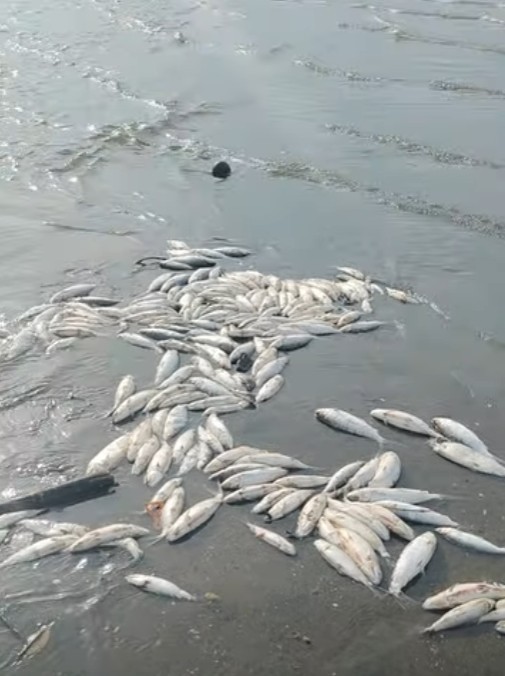
BAROY, LANAO DEL NORTE — The Bureau of Fisheries and Aquatic Resources (BFAR) has issued a local advisory following the continued water discoloration observed in several coastal areas around Panguil Bay since May 9, 2026, intensifying concerns over the ongoing fish kill incident that has already alarmed coastal communities in Lanao del Norte.
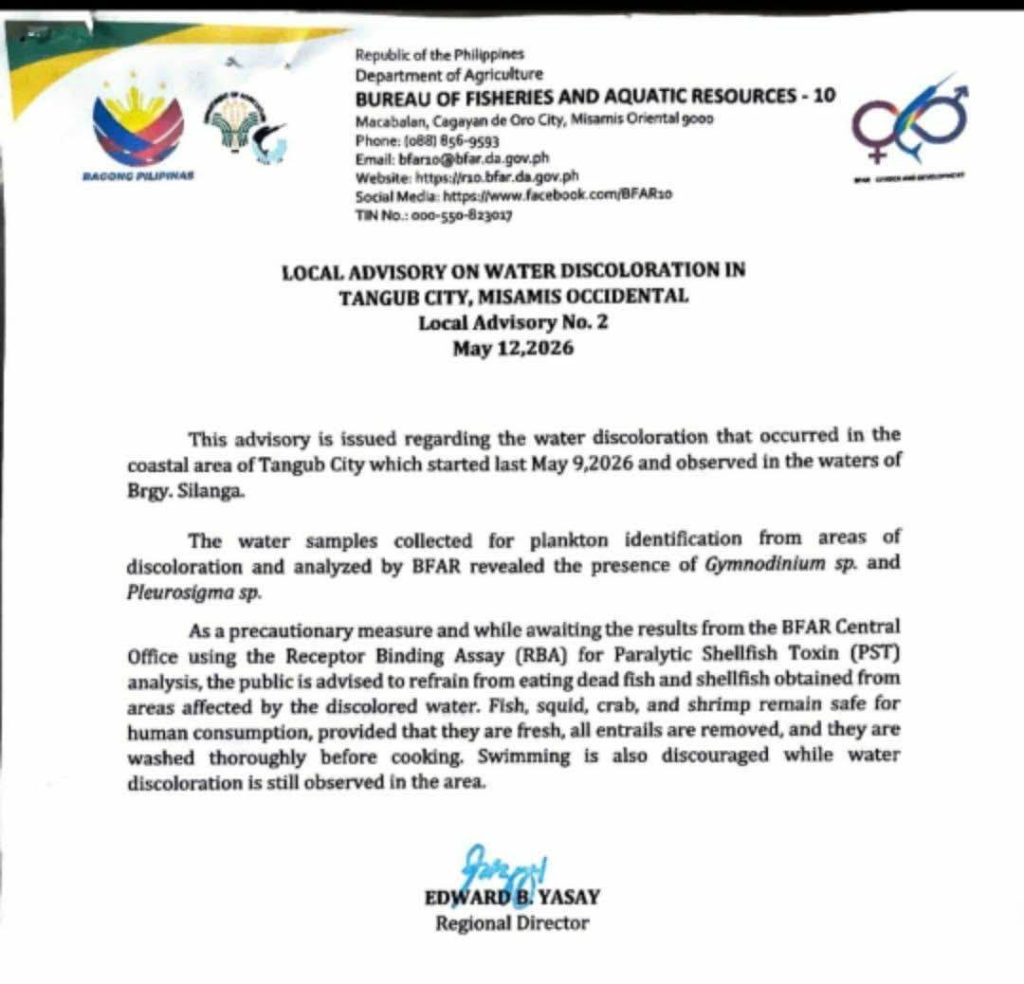
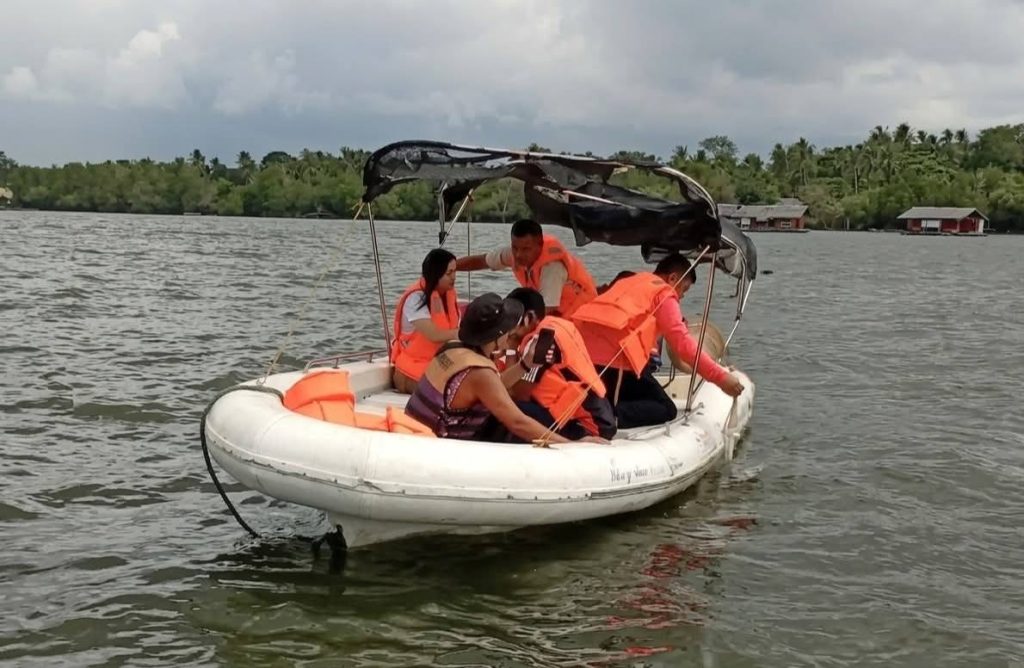
The discoloration was particularly noted in the waters surrounding Barangay Silanga, where BFAR conducted water sampling and laboratory analysis as part of its ongoing investigation into the environmental disturbance affecting the bay.
According to BFAR, laboratory examination of collected water samples revealed the presence of Gymnodinium species and Pleurosigma species — microscopic plankton organisms believed to be the possible cause of the unusual change in water color.
Authorities are now investigating whether the plankton bloom is linked to the reported fish deaths and the worsening condition of marine waters across affected coastal villages.
As a precautionary measure while awaiting the official results of the Paralytic Shellfish Toxin (PST) analysis from the BFAR Central Office, the agency strongly advised the public not to consume dead fish and shellfish collected from areas affected by the water discoloration.
BFAR, however, clarified that fresh fish, squid, crabs, and shrimp remain safe for consumption provided that all internal organs are removed and the seafood is thoroughly washed before cooking.
The agency also discouraged residents from swimming in discolored waters due to possible health risks associated with exposure to harmful algal blooms or contaminated water.
“Continuous monitoring and coordination with local government units are ongoing to ensure public safety and protect marine resources,” BFAR said in its advisory.
The latest development comes days after hundreds of dead fish were discovered floating and washing ashore in Raw-an Point, Baroy, triggering fears of a possible environmental crisis in Panguil Bay.
Environmental experts earlier pointed to several possible causes behind the fish kill, including harmful algal blooms or red tide, oxygen depletion due to fish cage congestion and upwelling, as well as possible pollution or chemical contamination from land-based sources.
With concerns escalating, the Municipal Government of Tubod, Lanao del Norte has taken stricter precautionary measures.
Tubod Mayor Dionisio Y. Cabahug Jr. issued Executive Order No. 30 imposing a temporary ban on the sale, distribution, and consumption of bangus, shellfish, crabs, shrimp, and other fish products sourced from Panguil Bay.
The executive order was prompted by the continuing water discoloration and fish deaths affecting coastal communities in the municipality.
Under the same order, the local government also created a Municipal Response and Monitoring Team composed of various offices and agencies tasked with conducting monitoring operations, enforcing regulations, submitting reports, and implementing response measures to address the incident.
Meanwhile, the Philippine Coast Guard, through the Coast Guard Station Misamis Occidental (CGS MISOCC), also launched coastal security and seaborne patrol operations in response to the fish kill incident and seawater discoloration affecting Panguil Bay and the coastal waters of Tubod, Lanao del Norte.
The operations were conducted under the leadership of Joniel C. Detumal on May 13, 2026, with Coast Guard personnel deployed through various substations to closely monitor affected coastal areas and assess prevailing maritime and environmental conditions.
According to CGS MISOCC, the patrol operations aimed to strengthen maritime surveillance, gather information regarding the incident, and evaluate its possible impact on coastal communities and marine resources within their area of responsibility.
The Coast Guard said it continues to coordinate with concerned local government units and partner agencies to ensure proper monitoring and assessment of the situation while maintaining readiness to provide immediate response and assistance if necessary.
The agency also reaffirmed its commitment to protecting the marine environment, ensuring maritime safety and security, and safeguarding the welfare of coastal communities affected by the environmental disturbance.
The fish kill and possible algal bloom threaten not only public health but also the livelihood of fisherfolk and fish cage operators who depend heavily on Panguil Bay’s marine resources.
Residents and coastal communities are now awaiting the results of BFAR’s toxin analysis to determine whether the waters have been contaminated by harmful marine toxins associated with red tide events.
Authorities continue to urge the public to remain vigilant and strictly follow official advisories while the investigation and monitoring operations remain underway.