
IMPASUG-ONG, Bukidnon — A tragic incident at Atugan Bridge in Impasug-ong, Bukidnon, on Monday afternoon, November 16, has renewed calls for greater public awareness of mental health struggles, the importance of checking on loved ones, and the need to make emotional and psychological support more accessible to people experiencing difficult periods in their lives.

A man was reportedly seen jumping from Atugan Bridge at around 4:30 p.m. Police personnel immediately responded after receiving information about the incident. Authorities subsequently began documenting the case, establishing the man’s identity, and coordinating with his family.
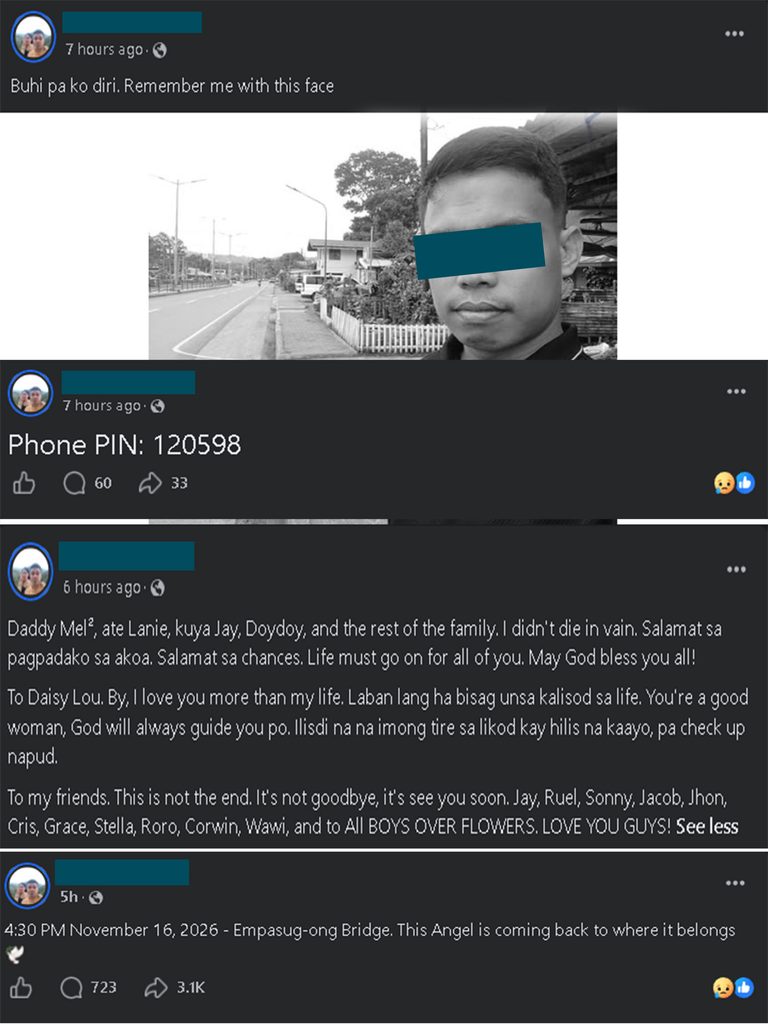
The incident drew public attention after several posts reportedly appeared on a Facebook account bearing the name Jemson Ferraren shortly before the reported incident. The posts contained what appeared to be farewell messages addressed to his family, romantic partner, and friends.
Based on the reported chronology, the account first published a photograph of the man at approximately 2:30 p.m., accompanied by a message asking people to remember him. This was followed by a lengthy message at around 3:30 p.m., expressing gratitude to family members, offering words of encouragement to his loved one, and addressing his circle of friends.
At approximately 4:30 p.m., another post reportedly referred to Atugan Bridge and contained language suggesting a final farewell.
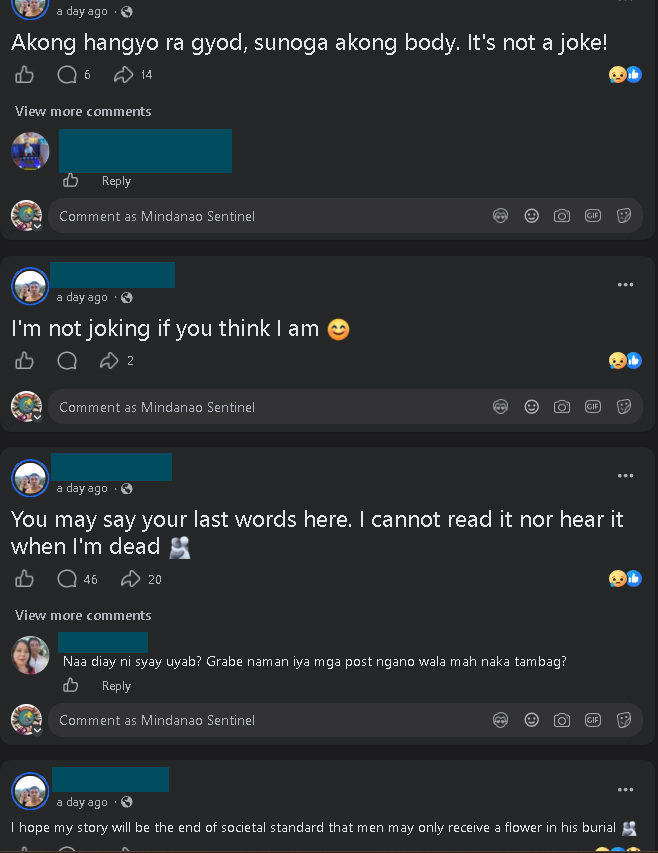
A separate lengthy post published a day earlier offered a deeply personal account of years of emotional and spiritual struggles, financial difficulties, periods of homelessness, and a continuing search for meaning and belonging.
The account described experiences of moving from one place to another, struggling to rebuild his life, and attempting to find reasons to keep going despite periods of profound emptiness and uncertainty. It also expressed a desire to receive another opportunity in life, while conveying a sense of exhaustion and hopelessness.
The posts have prompted conversations about how easily a person’s internal struggles can remain unnoticed, even by people who regularly interact with them.
However, authorities have yet to complete the official investigation and documentation of the incident. The contents of social media posts should not, by themselves, be treated as conclusive evidence of the circumstances or underlying causes of the tragedy.
Depression and emotional distress must never be dismissed
Beyond the immediate circumstances, the incident underscores a serious public health concern: mental health struggles can affect people regardless of their age, background, professional achievements, financial circumstances, or outward appearance.
Depression is not simply sadness, a bad day, or a temporary lack of motivation. It is a serious mental health condition that can affect a person’s thoughts, emotions, behavior, relationships, and ability to cope with everyday life.
Some people experiencing severe emotional distress may continue working, socializing, smiling, and appearing functional while privately struggling with overwhelming feelings. Others may openly express hopelessness, exhaustion, isolation, or the belief that they have become a burden to those around them.
These expressions should never automatically be dismissed as attention-seeking, drama, or exaggeration.
At the same time, not every person experiencing depression will communicate their struggles in the same way. There is no single appearance or behavior that can reliably identify everyone who needs help.
This is why awareness must be accompanied by genuine concern, patience, and a willingness to listen.
Check on family members and friends — even when they seem fine
The tragedy also serves as a reminder that checking on loved ones should go beyond routine greetings and casual conversations.
Parents, children, siblings, partners, relatives, and friends should make time to ask one another how they are genuinely doing. A simple conversation, a sincere expression of concern, or an invitation to talk can help someone feel that they are not alone.
Be especially attentive when someone begins withdrawing from social interactions, repeatedly expresses hopelessness, talks about having no reason to continue, gives away important belongings, or communicates farewell-like messages.
Statements about wanting to die, disappear, or end one’s life must always be taken seriously.
If someone appears to be in immediate danger, do not leave that person alone if it is safe to stay. Listen without judgment, avoid arguing or minimizing their feelings, and help connect them with qualified mental health professionals or emergency services. Do not promise secrecy when someone’s life may be at risk.
Most importantly, do not wait for a tragedy before reaching out. Support should not be offered only when a person has reached a breaking point.
Help is available. No one should have to face the struggle alone.
Depression and other mental health difficulties are treatable, and seeking professional assistance is not a sign of weakness. Psychologists, psychiatrists, counselors, social workers, and other trained professionals can help individuals understand their experiences and explore appropriate forms of treatment and support.
In the Philippines, people experiencing a mental health crisis or those concerned about someone at risk can seek assistance through the National Center for Mental Health (NCMH) Crisis Hotline at 1553. In an immediate life-threatening emergency, contact 911 or proceed to the nearest emergency department.
Families and friends can also help by accompanying someone to a health facility, assisting them in accessing counseling, and maintaining regular, compassionate communication.
Mental health support should not end with a single conversation. Recovery and healing can require time, professional care, understanding, and a dependable support system.
A reminder that compassion can save lives
The circumstances surrounding the Atugan Bridge incident remain under investigation, but the broader lesson deserves attention beyond Impasug-ong and Bukidnon.
Many people carry struggles that are not immediately visible. Some are dealing with financial hardship, broken relationships, loneliness, spiritual questions, professional setbacks, or emotional exhaustion. Others may be fighting battles they cannot easily explain, even to the people closest to them.
We must learn to listen more carefully, ask meaningful questions, and extend compassion without waiting for someone to ask for help.
A message, a phone call, a visit, an invitation to share a meal, or simply being present can remind a struggling person that they still matter.
Depression is serious. Emotional suffering is real. Asking for help is courageous, and help is available.
Let this tragedy remind every family, community, and individual to look after one another. Check on your parents, children, siblings, partners, relatives, and friends. Do not assume that someone is doing well simply because they smile or say they are fine.
Sometimes, the most important thing we can do for another person is to make them feel heard, valued, supported, and never alone.