
TACURONG CITY, Sultan Kudarat — Government officials, security forces, peace advocates, and community stakeholders came together in Tacurong City on September 3, 2026, for the 1st Provincial Sultan Kudarat Peace Advocates Assembly, highlighting a collective push to strengthen peacebuilding, reconciliation, unity, and sustainable development across the province.
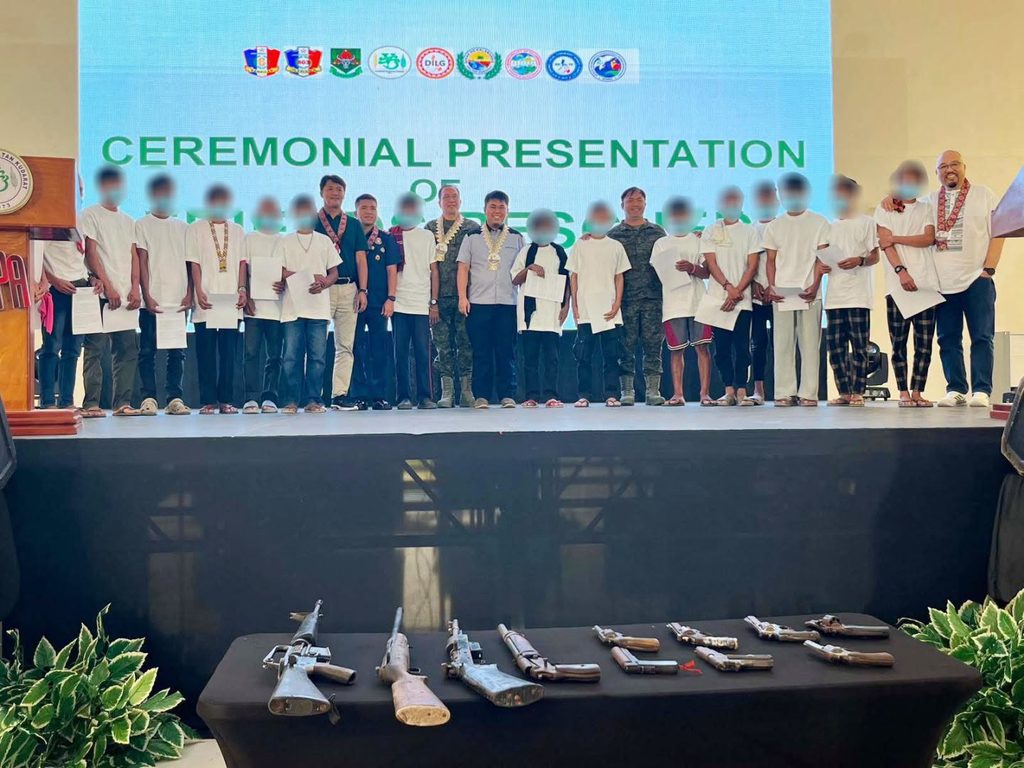
Held at the Sultan Kudarat Convention Center in EJC Montilla, the assembly brought together representatives from national government agencies, local government units, the military and police, Indigenous Peoples communities, and civil society organizations under the banner of a shared commitment to sustaining peace in Sultan Kudarat.
One of the most significant moments of the gathering was the formal presentation of 16 “Friends Rescued” (FRs) from the Manobo Dulangan Indigenous Peoples communities of Palimbang and Kalamansig, who returned to their communities and surrendered their firearms.
The development was presented as an important step in the continuing peace and reconciliation efforts in the province, particularly in communities that have experienced conflict and insecurity.
The 16 FRs were facilitated in their peaceful recovery by the 603rd Infantry “Persuader” Brigade through the 37th Infantry “Conqueror” Battalion, under the leadership of Acting Brigade Commander Colonel Glenn Loreto T. Caballero and Battalion Commander Lieutenant Colonel Efren M. Tongya-en, respectively.
Their participation in the assembly placed the focus not only on the surrender of firearms but also on what comes after the decision to abandon armed involvement—the opportunity to return to communities, rebuild relationships, and participate in community development.
A broader coalition for peace
The assembly was attended by Sultan Kudarat Governor Datu Pax Ali S. Mangudadatu, who led the administration of the oath of office of the newly elected officers of the Provincial Sultan Kudarat chapter of the SOCCSKSARGEN Peace Advocates for Nation-Building and Development (SPAND).
SPAND serves as one of the platforms bringing together peace advocates and stakeholders in the SOCCSKSARGEN region to promote peace, development, and community participation.
Also represented at the gathering was the Office of the Presidential Adviser on Peace, Reconciliation and Unity (OPAPRU), through Ms. Jenet M. Cedeño, CPA, representing Secretary Mel Senen S. Sarmiento.
The presence of national and regional government agencies underscored the increasingly multi-sectoral character of peacebuilding, where security measures are combined with governance, social services, agriculture, local development, and community participation.
Among those present were representatives of the Armed Forces of the Philippines, including the 10th Infantry Division, 6th Infantry Division, and 1st Mechanized Infantry Brigade, as well as the Department of the Interior and Local Government Region XII, Department of Agriculture XII, and Department of Social Welfare and Development XII.
Local government officials from Kalamansig, Palimbang, and SNA also participated in the gathering.
Mr. Belly Berana Jr., president of SPAND, likewise joined government and security officials in the assembly.
Police reaffirm commitment
The Police Regional Office 12 (PRO 12) reaffirmed its support for peacebuilding and reconciliation initiatives in Sultan Kudarat during the gathering.
Regional Director PBGen Alan B. Manibog was represented by Sultan Kudarat Police Provincial Office Acting Provincial Director PCOL Marvin A. Fontalva, who delivered the regional police leadership’s message of support.
The police leadership emphasized the importance of sustained cooperation among government agencies, security forces, peace advocates, and communities in pursuing lasting peace and development.
For law enforcement agencies, such cooperation extends the peace agenda beyond traditional security operations. Community engagement and coordination with local stakeholders are critical in creating conditions where communities can address conflict and insecurity through peaceful mechanisms.
The formal surrender of the 16 FRs and their firearms provided a tangible example of how community-based engagement can contribute to efforts aimed at reducing the presence of firearms and encouraging individuals to return to civilian community life.
Military: Peace must go beyond armed conflict
The 603rd Infantry Brigade also used the assembly to reaffirm its support for SPAND and other government-led peace initiatives.
Representing Brigadier General Ricky P. Bunayog, Acting Commander of the 6th Infantry Division and Joint Task Force Central, Colonel Caballero delivered a message emphasizing that lasting peace cannot depend solely on military or government action.
The message stressed the need for cooperation, understanding, and active participation from communities and other sectors.
The military’s role, as reflected in the assembly, also includes facilitating the transition of former armed individuals toward civilian life and supporting opportunities that can allow them to contribute to their communities.
The 16 FRs from Palimbang and Kalamansig illustrated this dimension of the peace process.
Their decision to return to their communities was accompanied by their participation in a gathering focused on peace advocacy and development—placing reintegration alongside security as a key component of the province’s peacebuilding efforts.
From surrender to reintegration
The formal surrender of firearms often marks only the beginning of a much longer process.
For individuals leaving armed involvement, the challenge is not simply putting down a weapon. It can also involve rebuilding relationships, restoring livelihoods, reconnecting with communities, and finding legitimate ways to participate in local development.
This makes the participation of local governments, social welfare agencies, agriculture offices, Indigenous Peoples communities, security forces, and civil society organizations particularly significant.
The presence of these different institutions at the Sultan Kudarat assembly reflected the recognition that peacebuilding involves more than preventing armed conflict. It also requires creating conditions in which communities can pursue livelihoods, access government services, participate in governance, and resolve disputes without resorting to violence.
For the 16 FRs, returning to their communities represents a critical part of that process.
Their presence at the assembly also gave a human dimension to the province’s broader peace agenda: peace is ultimately measured not only by the absence of armed encounters but by whether individuals and communities are able to resume productive and peaceful lives.
Indigenous communities at the center
The involvement of members of the Manobo Dulangan Indigenous Peoples communities of Palimbang and Kalamansig is particularly significant given the importance of these communities in Sultan Kudarat’s social and geographic landscape.
Their participation demonstrates that peacebuilding efforts in the province must take into account the realities of communities affected by conflict and insecurity, including Indigenous Peoples communities.
For peace initiatives to become sustainable, community members must have a meaningful role in shaping the conditions under which peace is maintained.
The return of the 16 FRs to their communities therefore carries significance beyond the surrender of firearms. It places community acceptance, reintegration, and participation at the center of the peace process.
A province-wide commitment
The 1st Provincial Sultan Kudarat Peace Advocates Assembly brought together institutions that often operate in different areas of governance but share a common interest in maintaining stability and supporting development.
Police forces are responsible for public safety and law enforcement. The military supports security and peace efforts. Local governments deliver services and lead local development. National agencies provide social protection, agriculture, governance, and peacebuilding programs. Civil society and peace advocates help mobilize communities and promote dialogue.
The assembly demonstrated how these different roles can converge around a common peace agenda.
Governor Mangudadatu’s leadership in administering the oath of office to the new Provincial SPAND officers also signaled the formal strengthening of the province’s peace advocacy structure.
Meanwhile, the participation of security forces and the presentation of the 16 FRs provided a concrete example of the connection between peace advocacy and community-level transformation.
Beyond the assembly
The significance of the gathering will ultimately depend on what follows.
The challenge for Sultan Kudarat is to sustain the momentum generated by peace initiatives and translate commitments made during assemblies into continuing engagement at the community level.
For the 16 individuals who surrendered their firearms, the next phase is reintegration into civilian life.
For communities, the task is to ensure that returning individuals can become productive members of society.
For government agencies, the responsibility is to maintain the partnerships and programs that can support peace, security, livelihoods, social services, and local development.
And for peace advocates, the continuing challenge is to keep dialogue and reconciliation alive even after the attention surrounding formal gatherings has faded.
The September 3 assembly offered a clear message: peacebuilding is a shared responsibility.
The police and military can provide security, but lasting peace requires communities willing to participate, local governments capable of delivering services, agencies working together, and individuals prepared to choose peaceful alternatives.
In Sultan Kudarat, the formal return of 16 former armed individuals and the organization of a provincial peace advocates federation represented two sides of the same effort—building the institutions and community relationships needed to turn individual choices for peace into a broader and more sustainable culture of peace.
As the province continues its peacebuilding journey, the assembly in Tacurong City served not merely as a gathering of officials and advocates, but as a reminder that reconciliation becomes meaningful when it reaches the communities where conflict has been experienced—and when those who once carried arms are given the opportunity to return, rebuild, and take part in shaping a more peaceful future.