
The Bangsamoro Autonomous Region in Muslim Mindanao (BARMM) is exploring the establishment of its own command center as part of efforts to make government services more accessible, responsive, and capable of providing faster assistance to residents during emergencies and other urgent situations.
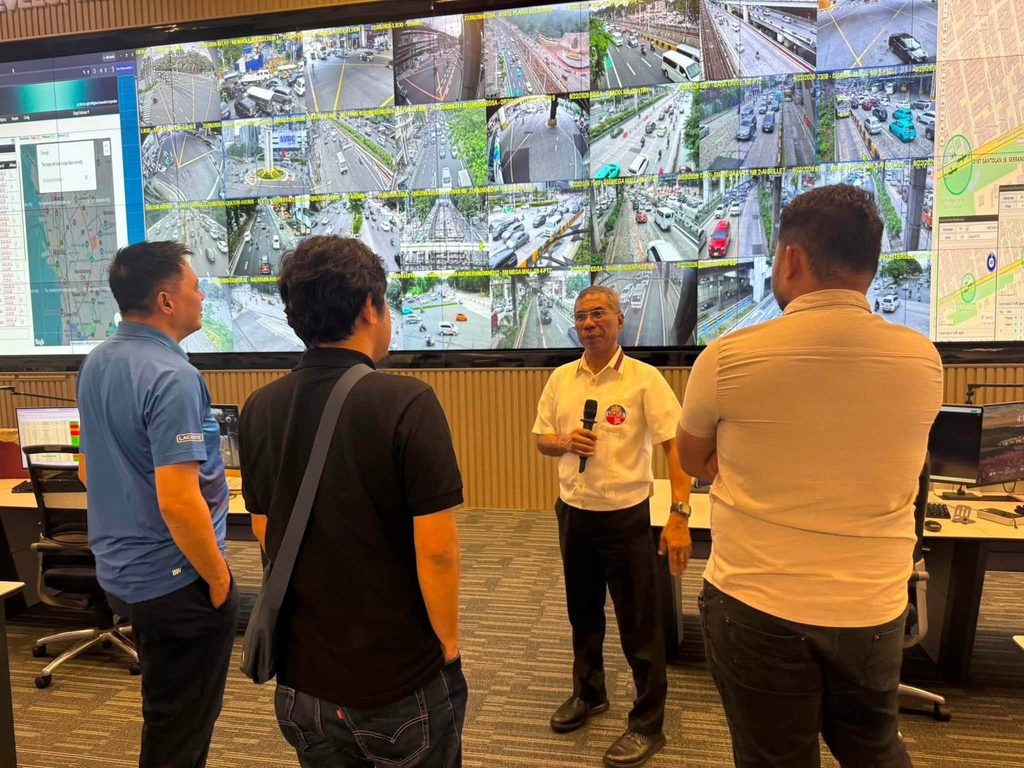
As part of the initiative, representatives of the BARMM visited the Metropolitan Manila Development Authority (MMDA) Command Center to study its operations and learn how the agency manages public concerns, emergency calls, and requests for assistance through a centralized system.
The visit focused, among others, on the MMDA’s Hotline 136, which serves as a channel for the public to report incidents, seek assistance, and relay concerns requiring government action.
MMDA Chairman Nicolas Torre III said the command center’s system is designed not merely to receive calls but to translate requests for help into actual government response on the ground.
“Proud to welcome our friends from BARMM to the MMDA Command Center and share how we operate Hotline 136—our system for turning a call for help into actual government response on the ground,” Torre said in a statement.
The MMDA’s command center provides a model of how information received through a centralized hotline can be processed and coordinated with appropriate government personnel and units for action.
For BARMM, adopting a similar system could provide the regional government with a more organized mechanism for receiving and responding to public complaints, emergencies, and other concerns across the Bangsamoro region.
The need for an efficient response mechanism is particularly significant in a region covering a wide geographic area and consisting of communities with varying levels of access to government services. A centralized command and communication system could help authorities consolidate information, identify urgent cases, coordinate with field offices, and monitor the response to incidents.
Beyond studying the MMDA’s operational procedures, the BARMM delegation’s visit also provided an opportunity for both institutions to exchange experiences and ideas on public service delivery.
Torre emphasized that while the MMDA and BARMM operate in different environments and face different challenges, they share the same objective of ensuring that government remains accessible and responsive to the people.
“But this visit is also about learning from each other. Magkakaiba man ang lugar at mga hamon natin, iisa ang goal: government that is accessible, responsive, and works for the people,” Torre said.
The exchange between the MMDA and BARMM highlights the potential for institutional cooperation in developing systems that can improve government responsiveness, particularly through technology, centralized communications, and coordinated field operations.
For BARMM, a regional command center could eventually serve as a single coordination point where public concerns and emergency reports are received, assessed, referred to the appropriate government agencies, and monitored until appropriate action is taken.
Such a system could also help improve accountability by creating a more structured process for documenting complaints and requests, tracking government responses, and identifying recurring problems that require policy or operational intervention.
Torre said the MMDA looks forward to further collaboration and the continued exchange of ideas with BARMM.
The initiative reflects a broader effort to strengthen public institutions by using technology and coordinated response systems to bring government services closer to communities—particularly when residents need immediate assistance.
As BARMM considers the development of its own command center, the MMDA’s experience with Hotline 136 offers a potential model for turning public calls for assistance into coordinated government action on the ground.
“Looking forward to more collaboration and exchange of ideas between MMDA and BARMM,” Torre said.