
MUNAI, Lanao del Norte — November 24, 2025. In a decisive stride toward long-term peace and stability, the Municipal Government of Munai successfully spearheaded the settlement of long-standing rido (clan feuds) and the turnover of loose firearms under the Small Arms and Light Weapons (SALW) Management Program.
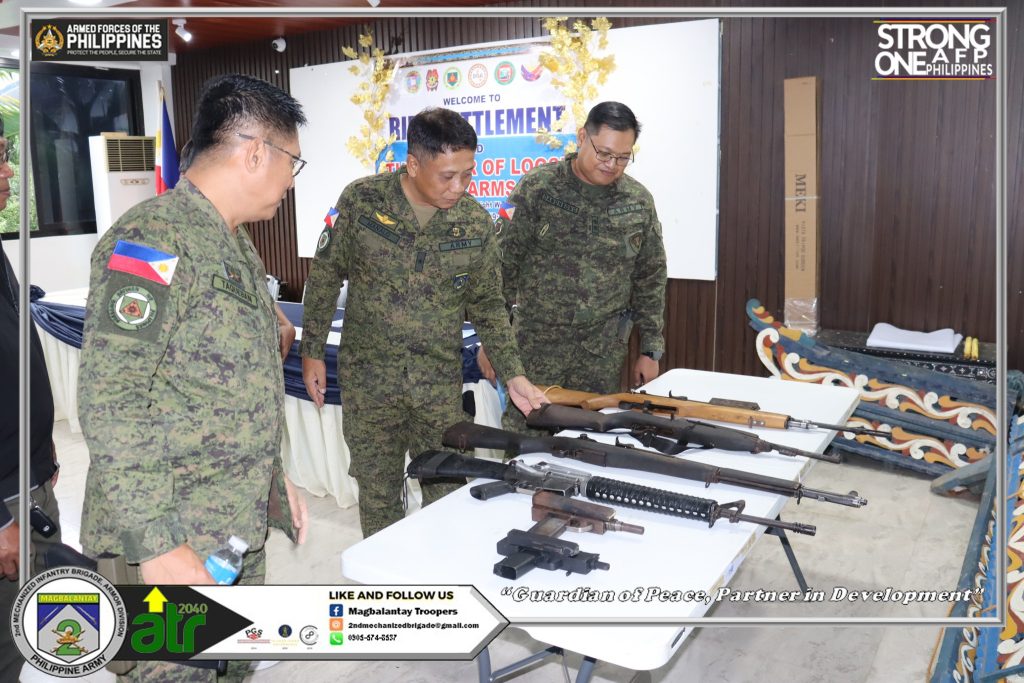
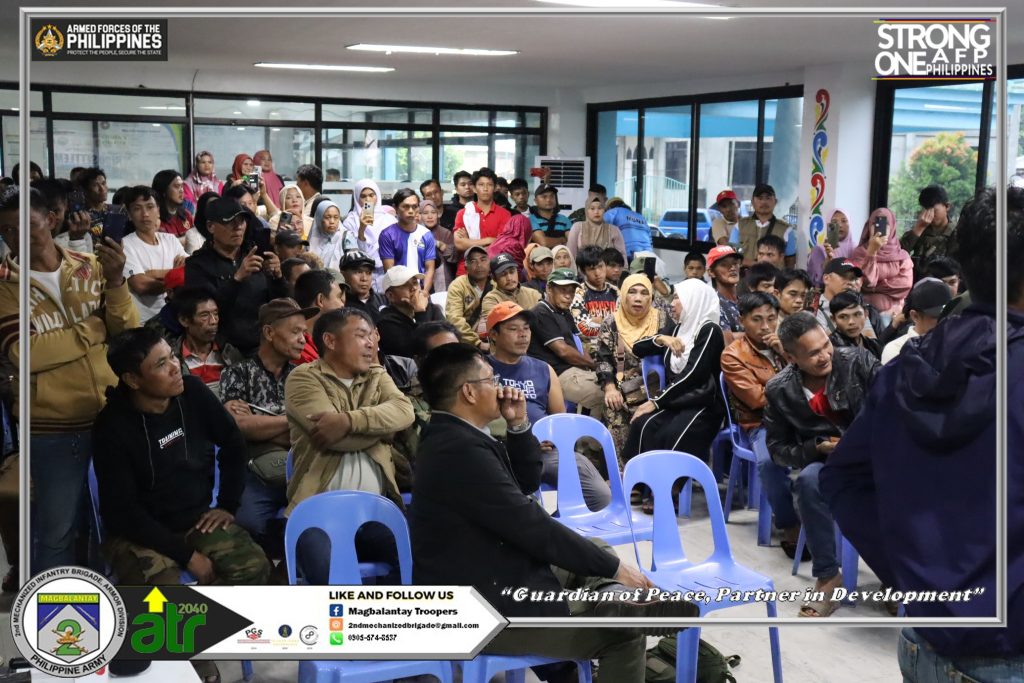
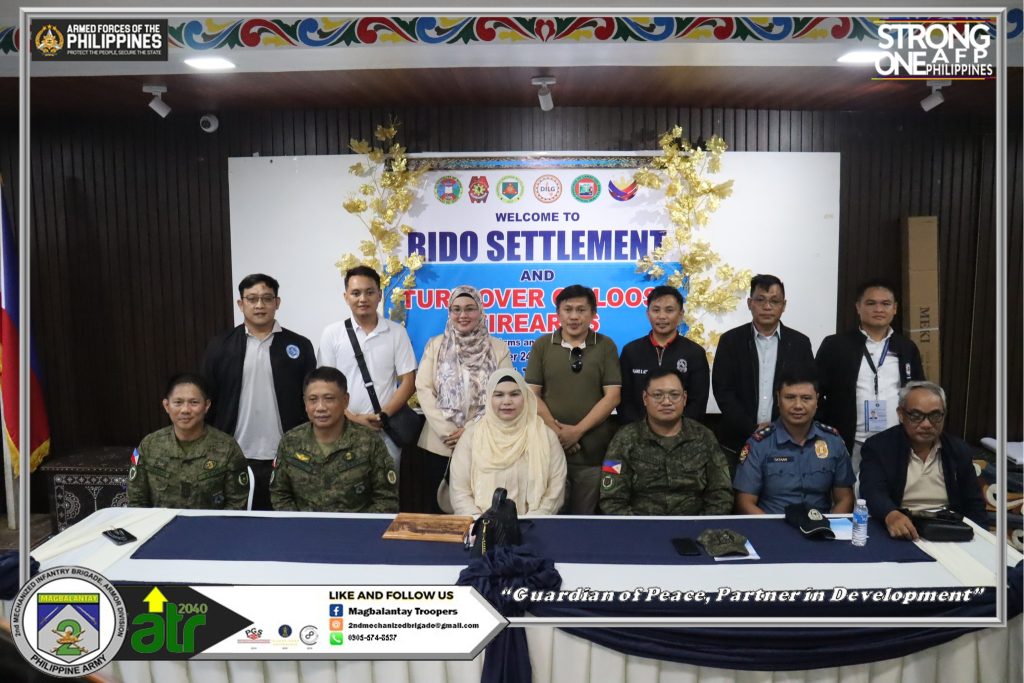
Held at the Municipal Hall, the ceremony brought together key security officials, local leaders, and community stakeholders who collectively affirmed their commitment to ending cycles of violence that have hindered progress in the municipality for decades.
Brigadier General Ronel R. Manalo, Commander of the 2nd Mechanized Infantry Brigade, led the military delegation alongside Deputy Brigade Commander Col. Bernardo A. Taqueban, 44th Infantry Battalion Commander Lt. Col. Jeremy D. Damonsong, and Munai Chief of Police PCpt. Pandapatan Tataan. Their presence underscored the unified stand of the Philippine Army and Philippine National Police in supporting local peace initiatives and strengthening coordination with local government units.
The event was spearheaded by Municipal Mayor Racma D. Andamama, whose administration has pushed aggressively for reconciliation among warring clans and the reduction of illicit weapons circulating in Munai. Through the SALW Program, feuding families voluntarily surrendered six (6) assorted high-powered firearms, signaling a concrete commitment to restoring peace and ensuring community security.
Local officials and traditional leaders expressed confidence that the rido settlement and the surrender of unregistered firearms will ease tensions, prevent future violence, and create a more stable environment conducive to development.
In a statement, the 2nd Mechanized Infantry Brigade lauded the strong collaboration between the LGU, security forces, and community partners, reaffirming its commitment to sustain peace-building efforts across Lanao del Norte.
As Munai continues to heal from decades of clan conflict, Monday’s ceremony stands as a powerful reminder that peace is possible when communities, government, and security institutions work together toward a shared future.