
COTABATO CITY— A sweeping agricultural renaissance is underway in the Bangsamoro Autonomous Region in Muslim Mindanao (BARMM) as the region combines advanced soil science, data-driven farming, and grassroots support to reclaim and revitalize its farmlands—many of which have long suffered from conflict, environmental degradation, and outdated practices.
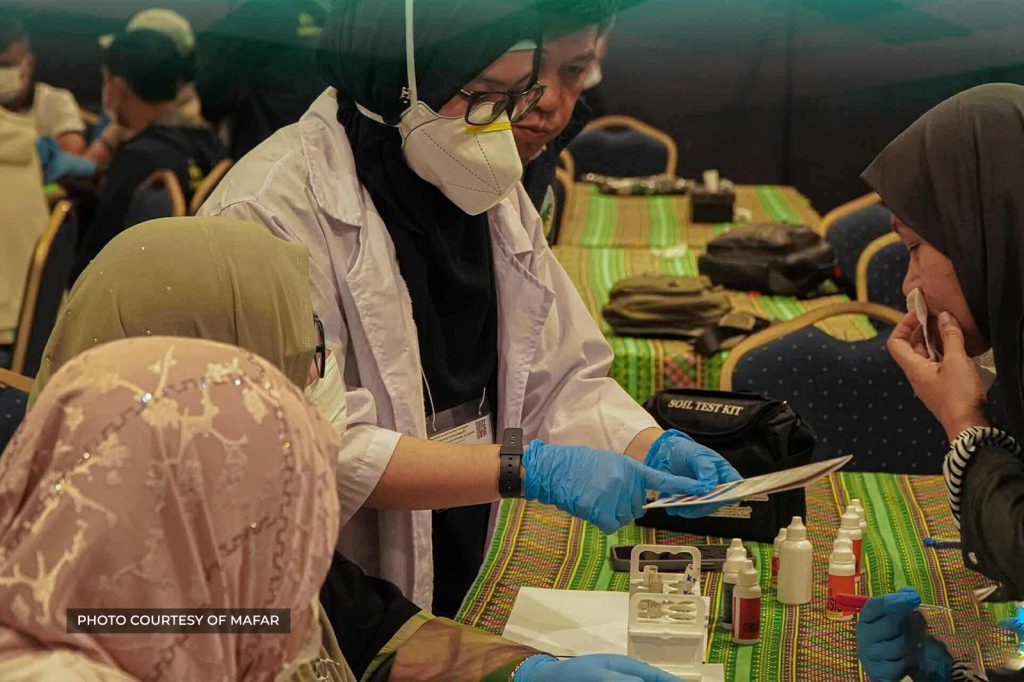

At the heart of this transformation is a major scientific breakthrough by the Ministry of Agriculture, Fisheries, and Agrarian Reform (MAFAR), which recently “decoded” the agricultural DNA of the region’s soil. The landmark development came during the Soil Fertility Treatment Localization and Location-Specific Cropping Patterns and Calendar Workshop held in Cagayan de Oro City on June 24–25.
Fatima Haron, a MAFAR researcher, described the effort as a “healing ritual” for a land traumatized by decades of war and monocropping. With 68 percent of Bangsamoro farmland found to be highly acidic (pH below 5.3), erratic weather patterns, and corn yields trailing the national average by 40 percent, the workshop served as a call to action.
Leading the soil-rescue mission were top agri-technicians from BARMM, joined by experts from the Bureau of Soils and Water Management (BSWM). They trained on cutting-edge tools like digital soil mapping, artificial intelligence (AI)-powered nutrient analysis, and location-specific cropping calendars designed to combat climate disruptions.
“This isn’t just about higher yields,” said MAFAR Director Tong Abas. “This is food sovereignty for Bangsamoro. When our soil thrives, our people flourish.”
BSWM Director Dr. Gina Nilo echoed the urgency, calling for “surgical” interventions tailored to the unique volcanic geology of the region.
One of the flagship tools emerging from this initiative is the BARMM Soil Health App, set to launch in October 2025. The mobile app allows farmers to scan soil samples for instant pH readings, receive crop-specific fertilizer plans, and access climate-resilient seed recommendations.
Next year, MAFAR will also roll out the BARMM Soil Atlas, an interactive digital map to guide farmers on optimal crops for specific locations—empowering communities with hyper-local knowledge once accessible only to researchers.
Parallel to these scientific advances, tangible support is reaching farmers on the ground through Project TABANG’s Oplan Bangsamoro Rapid Assistance (OBRA). Since July 3, the Office of the Chief Minister has distributed ₱91.6 million worth of agricultural inputs and equipment to 245 farmers’ cooperatives across and beyond the BARMM mainland provinces.
Each cooperative received seed packs, fertilizers, herbicides, foliar inputs, and knapsack sprayers to enhance productivity and operations—vital support especially for under-resourced communities.
Haris Esmael, Project TABANG’s Information and Communication head, emphasized the importance of equipping farmers who lack the resources to sustain or grow their production.
“Malaking tulong ito sa mga farmers’ cooperative, lalo na sa mga kulang sa kagamitan at agricultural inputs,” Esmael said.
Among the grateful beneficiaries is Macabalang Mustapha, 58, from Barangay Langogan in the Special Geographic Area (SGA). His cooperative, Langogan Farmer Agriculture Inc., was one of those selected to receive the aid.
“We are grateful for everything that Project TABANG provides. Most importantly, our cooperative was among the beneficiaries,” Mustapha said.
His one-hectare farm—his family’s sole source of income—typifies the smallholder operations that dominate Kapalawan, one of the SGA’s newest municipalities, where coconut, corn, oil palm, and sugarcane are staple crops.
As part of its broader agricultural blueprint, MAFAR is also piloting custom cropping calendars in 12 towns, deploying mobile soil labs to remote areas, and drafting the first-ever Bangsamoro Soil Health Act in collaboration with BSWM.
These synchronized efforts align with the Bangsamoro Government’s 4th priority agenda: ensuring food security through resilient, inclusive, and science-driven agriculture.
“Before, we prayed for rain,” said Director Abas. “Now, we engineer resilience. Our grandparents farmed by folklore. We farm by data.”