
COTABATO CITY, Philippines — A major milestone in Mindanao’s healthcare landscape has been achieved after the Cotabato Regional and Medical Center (CRMC) successfully performed its first-ever Deep Brain Stimulation (DBS) surgery—an advanced neurosurgical procedure that offers renewed hope to patients suffering from severe and uncontrolled movement disorders.
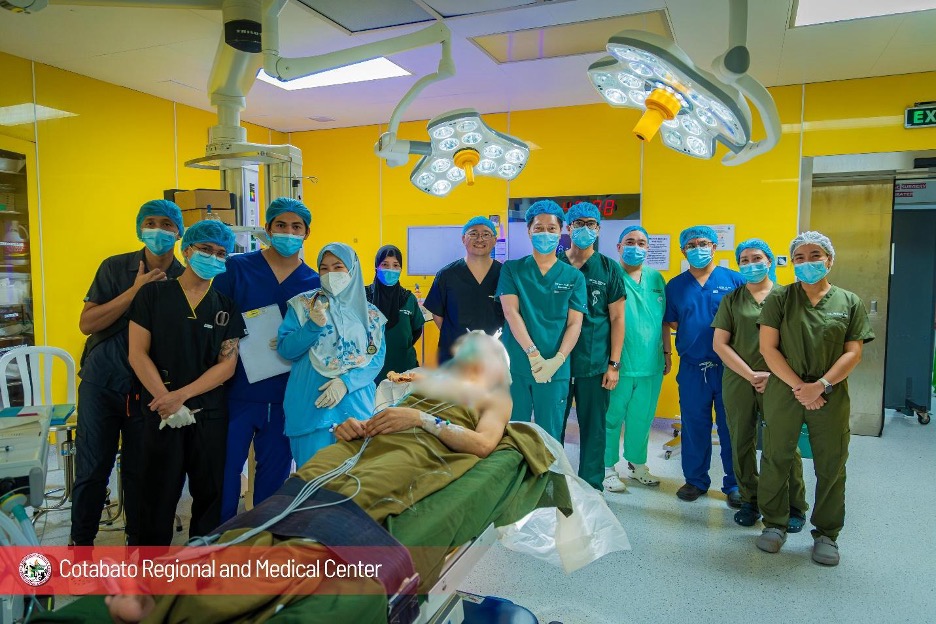
The historic operation was conducted on February 22, 2026, at the hospital’s Operating Room Complex, marking the formal launch of CRMC’s Deep Brain Stimulation Surgical Mission. The breakthrough signals a new era in specialized neurosurgical care for patients across the Bangsamoro Autonomous Region in Muslim Mindanao (BARMM) and Region XII, also known as SOCSKSARGEN, where access to highly specialized procedures has long been limited.
A Breakthrough for Patients with Movement Disorders
Deep Brain Stimulation is considered one of the most advanced treatments for debilitating neurological conditions such as Parkinson’s disease and Lubag, also known as X-linked recessive dystonia. These conditions cause severe involuntary movements, muscle stiffness, and progressive loss of motor control, often making daily activities difficult or impossible for patients.
The procedure involves the precise implantation of electrodes into specific deep structures of the brain responsible for motor control. Once activated, these electrodes regulate abnormal neural signals that cause tremors, rigidity, and other disabling symptoms. For many patients, DBS can significantly improve mobility, independence, and overall quality of life.
For years, individuals from Mindanao needing this highly specialized procedure had to travel to major hospitals in Metro Manila, a journey that required substantial financial resources and logistical support. With DBS now available in Cotabato City, patients from remote communities in southern Philippines may finally receive life-changing treatment closer to home.
Collaboration Across the Country’s Leading Hospitals
The success of the DBS surgical mission was made possible through a collaboration between CRMC and several of the country’s top tertiary medical institutions. These include the Vicente Sotto Medical Memorial Center, Makati Medical Center, Philippine General Hospital, and Southern Philippines Medical Center.
Specialists from these institutions joined forces with CRMC doctors and staff to form a multidisciplinary DBS team composed of neurosurgeons, neurologists, anesthesiologists, neurophysiologists, and surgical residents. Among them were stereotactic and functional neurosurgeons Dr. Dexter Dimaano and Dr. Jean Quint Oropilla, neuroanesthesiologist Dr. Mark Lowell Ang, clinical neurophysiologist Dr. Rosalia Teleg, and movement disorders neurologists Dr. Dominic Jamora and Dr. Alfand Dy-Closas. Senior neurosurgery residents Dr. Amir Faisal Samanodi and Dr. Kim Alingcomot also played key roles in the procedure.
Working alongside the CRMC Department of Anesthesiology and Operating Room Nursing Staff, the team ensured a coordinated and patient-centered surgical process that adhered to the highest standards of clinical excellence.
Rigorous Screening and Preparation
Before undergoing the groundbreaking surgery, prospective patients were subjected to a comprehensive evaluation process. This included detailed neurological assessments, advanced imaging studies, and multidisciplinary consultations to determine their suitability for DBS.
Hospital officials emphasized that the rigorous screening was necessary to ensure safety, ethical medical practice, and the best possible outcomes for patients undergoing the highly specialized procedure.
Support for Indigent Patients
The DBS surgical mission was further strengthened through the support of several members of the Bangsamoro Transition Authority (BTA), whose financial contributions helped expand access to the procedure for underserved patients in Mindanao.
Among those who extended assistance were Member of Parliament Anayatin with ₱200,000 in support, MP Pagayao and MP Mastura with ₱100,000 each, and MPs Iqbal and Mitmug with ₱30,000 each. Their contributions enabled the hospital to extend advanced care to patients who otherwise might not have been able to afford the procedure.
A Life-Changing Outcome
One indigent patient has already undergone the procedure and is currently recovering at CRMC. Hospital officials reported that the surgery was successful, marking a promising beginning for the program and a significant step toward expanding access to advanced neurological care in the region.
For families who have long struggled with the physical, emotional, and financial burden of severe movement disorders, the development represents more than a medical achievement—it is a sign that world-class treatment is now within reach.
Leadership Driving Innovation in Mindanao Healthcare
CRMC Medical Center Chief Dr. Ishmael R. Dimaren underscored that the successful DBS mission reflects the hospital’s continuing push for innovation and equitable healthcare access, particularly for indigent and underserved communities across Mindanao.
Under his leadership, the hospital has been steadily strengthening its capacity to provide specialized services that were once available only in a few major institutions in the country.
By bringing DBS surgery closer to patients in Cotabato City and neighboring provinces, CRMC is helping reduce the financial and logistical burden associated with traveling to Metro Manila for treatment—an obstacle that has long prevented many patients from receiving care.
A New Chapter for Regional Healthcare
The successful performance of Deep Brain Stimulation surgery at CRMC represents not only a technological breakthrough but also a broader shift in the delivery of healthcare in Mindanao. It demonstrates how regional hospitals, through collaboration, leadership, and community support, can expand access to advanced medical procedures traditionally concentrated in major urban centers.
As CRMC continues to develop its DBS program, hospital officials expect more indigent patients to benefit from the life-changing intervention in the coming years.
For many in BARMM and SOCSKSARGEN, this achievement signals that the future of specialized healthcare is no longer distant—it is now unfolding closer to home.