
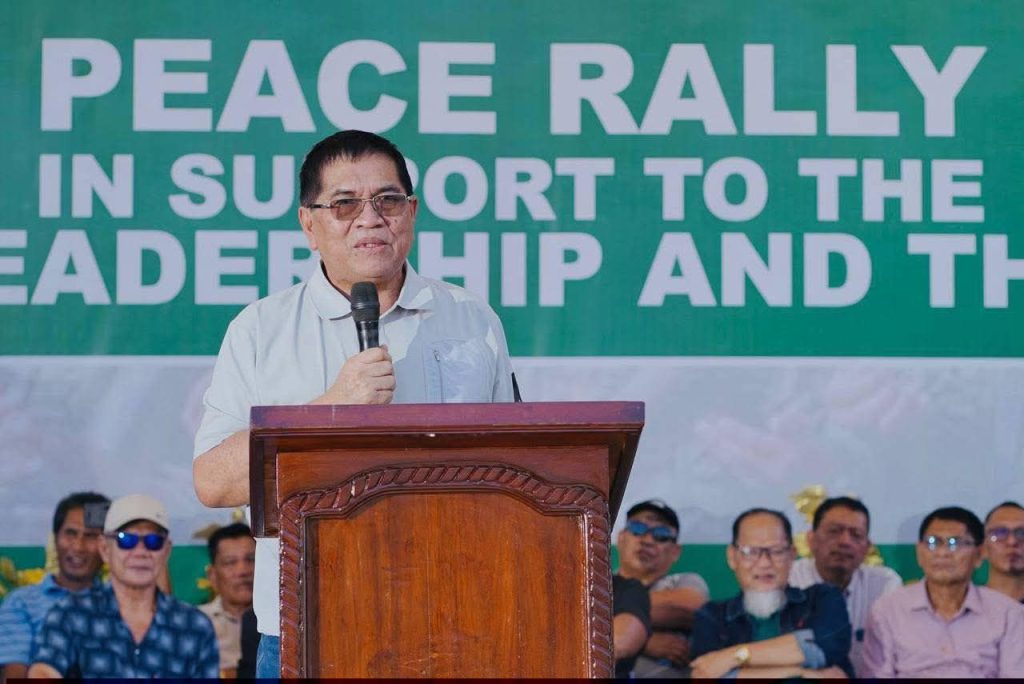
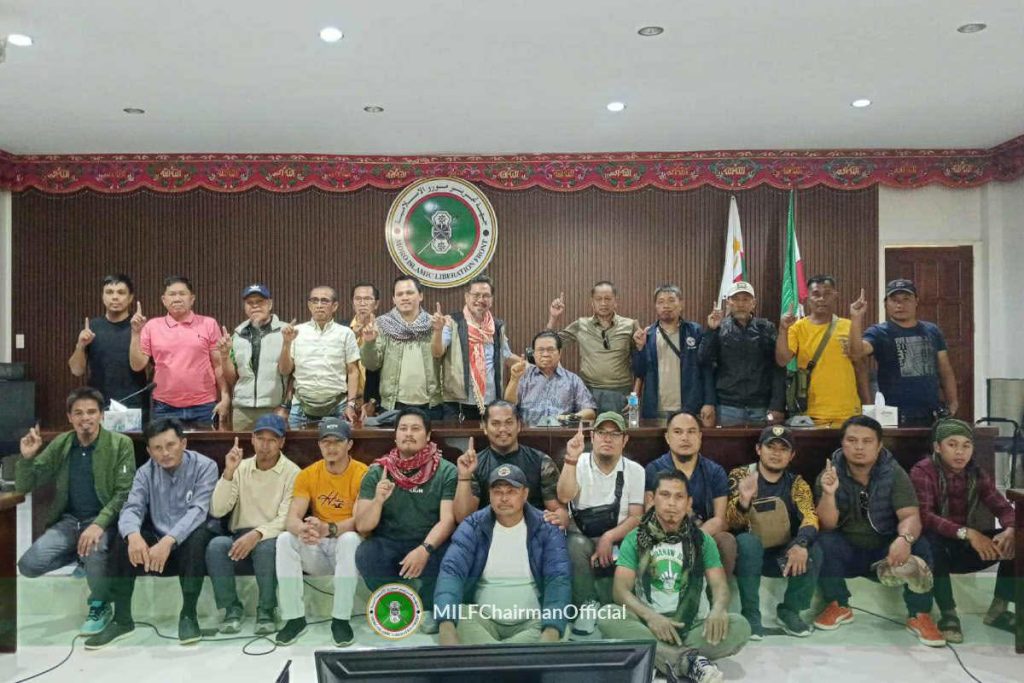
Two separate events that unfolded on September 6, 2025, speak volumes about the state of the Moro Islamic Liberation Front (MILF) today. On the one hand, Chairman Al Haj Murad Ebrahim — Amirul Mujahideen and President of the United Bangsamoro Justice Party (UBJP) — received a solemn bay-a (pledge of allegiance) from the 102nd Base Command of the Bangsamoro Islamic Armed Forces (BIAF) from Lanao del Sur and Lanao del Norte. On the other, Interim Chief Minister Abdulraof “Sammy Gambar” Macacua stood before tens of thousands in Cotabato City, defending suspended BIAF commanders and openly lamenting the pain caused by what he saw as unjust disciplinary actions.
Taken together, these parallel stories illustrate both the resilience and the fragility of MILF’s unity. They underscore the challenges of transition from revolutionary movement to governing authority — a transformation that demands not only political acumen but also delicate handling of internal disputes.
Chairman Murad’s meeting with the 102nd Base Command was no ordinary courtesy call. It was a symbolic reaffirmation of loyalty from a key command in the heartlands of Lanao. The bay-a performed by the commanders was more than ritual; it was an emphatic statement that the struggle for peace, justice, and self-determination continues under Murad’s leadership. At a time when questions swirl about the cohesion of the MILF, this act projected an image of steadfastness and control.
Yet, only hours away in Cotabato City, another reality was on display. Chief Minister Macacua, himself MILF-BIAF Chief of Staff and long-time comrade of Murad, broke his silence. Speaking at a peace rally joined by more than 80,000 supporters, he gave voice to the grievances of commanders suspended for allegedly defying Central Committee orders. To Macacua, their supposed offense — attending a peace-related gathering in Manila — was not insubordination but a continuation of their duty to the Bangsamoro cause. He emphasized that these men were among those who sacrificed most during the peace process, and their suspension wounded them deeply.
The juxtaposition of these events points to the uncomfortable truth: the MILF, while united in its ultimate vision, is divided in interpretation and practice. Loyalty to the Amirul Mujahideen remains a common thread, but differences in judgment over organizational discipline and political direction have created fissures.
Macacua’s words were revealing. He openly offered to resign if his appointment as Chief Minister could be rescinded by Murad himself — but not by others. His statement carried both humility and defiance: humility in his recognition of Murad’s singular authority, and defiance against those he perceives as undermining his role. His defense of suspended commanders further highlighted the ongoing tension between revolutionary solidarity and the formal structures of governance now imposed on the movement.
It is tempting to interpret these developments as signs of an impending split. But such a reading oversimplifies the complexity of the situation. What is evident is that the MILF is negotiating the difficult terrain between revolutionary discipline and democratic politics. In revolutions, unity is enforced through strict chain of command; in politics, unity is sustained through dialogue, compromise, and mutual recognition. The MILF now straddles both worlds, and the strains are showing.
For the Bangsamoro people, this is no trivial matter. The MILF’s credibility as both peace partner and governing authority depends on its ability to manage internal dissent without sacrificing cohesion. The stakes are high: disunity within its ranks risks emboldening spoilers, undermining peace dividends, and weakening public confidence in the BARMM’s political project.
Yet, amid these tensions, there is also hope. Both camps — Murad and Macacua — continue to profess loyalty to one another and to the broader cause. Both insist that the Bangsamoro struggle remains paramount. And both acknowledge the danger of fitna (discord) within their ranks. This shared recognition provides a foundation upon which reconciliation and renewed unity may be built.
The challenge now is to translate these professions into concrete action. Clear communication, transparent decision-making, and inclusive dialogue are necessary. Equally crucial is a willingness to revisit decisions that may have caused unnecessary divisions, such as suspensions perceived as unjust. The MILF must also remember that its greatest strength lies not merely in commands and decrees but in the trust and respect of its members — trust earned through decades of shared struggle.
At this juncture, the MILF stands at a crossroads. Will it emerge from this episode weakened by factionalism, or strengthened by its ability to reconcile differences while upholding its core vision? The answer will shape not only the future of the organization but also the stability of the Bangsamoro Autonomous Region in Muslim Mindanao.
Unity is never the absence of disagreement; it is the ability to transcend it. The events of September 6 remind us that the MILF’s path forward depends on whether its leaders can transform discord into dialogue, and division into renewed solidarity.