
BARIRA, Maguindanao del Norte / BONGAO, Tawi-Tawi — In a significant step toward preserving the region’s cultural and revolutionary legacy, the Bangsamoro Government has unveiled its first two regional historical markers, honoring pivotal sites that embody the Bangsamoro people’s struggle, identity, and resilience.
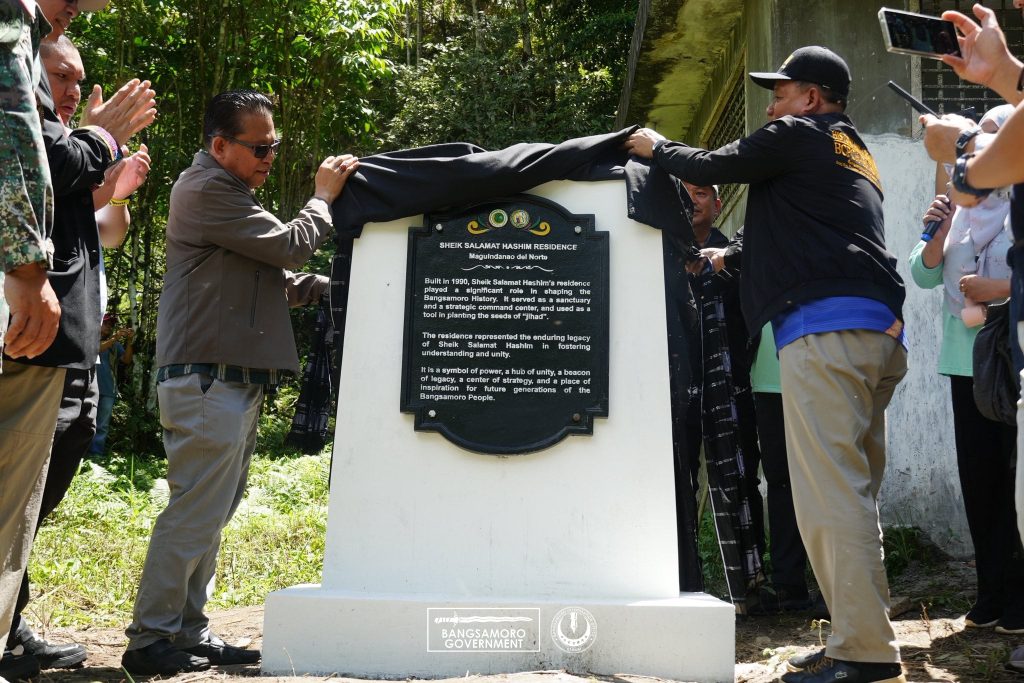
On July 3, the Bangsamoro Commission for the Preservation of Cultural Heritage (BCPCH) inaugurated its first marker at the former residence of the late Moro Islamic Liberation Front (MILF) Chairman Sheikh Salamat Hashim in Camp Abubakar, Barira, Maguindanao del Norte. The marker recognizes the site’s vital role in shaping Bangsamoro history and commemorates the life and legacy of Hashim, a visionary leader who championed the decades-long Bangsamoro struggle for self-determination.
BCPCH Chairperson Dr. Salem Lingasa described the launch as a fitting start for the Commission’s historical marker program.
“It is only right that we begin here, at Camp Abubakar, in the heart of a place that has witnessed so much of our history, and in the residence of a leader whose name and life are etched in the consciousness of every Bangsamoro,” Lingasa said during the ceremony.
Sheikh Salamat Hashim founded the MILF and led a revolutionary movement that eventually culminated in a peace agreement with the Philippine government. This paved the way for the establishment of the Bangsamoro Autonomous Region in Muslim Mindanao (BARMM). His residence, constructed in 1990, functioned as a strategic command center during the height of the armed struggle.
The initiative is part of BCPCH’s broader campaign to honor and preserve significant cultural sites across the region. An eco-park is also planned at the site, in accordance with the Bangsamoro Memorial Marker Act of 2024 (Bangsamoro Autonomy Act No. 61).
BARMM Senior Minister Mohammad Yacob stressed the importance of such markers in educating the next generation.
“Nare-remind tayo kung ano ang mga sakripisyong nagawa para ma-establish ang BARMM,” said Yacob.
“I encourage all our youth leaders na alamin kung ano yung history natin, at kung ano man ang pinagdaanan ng ating mga leaders sa mga nagdaang dekada toward their assertion of the Bangsamoro principles.”
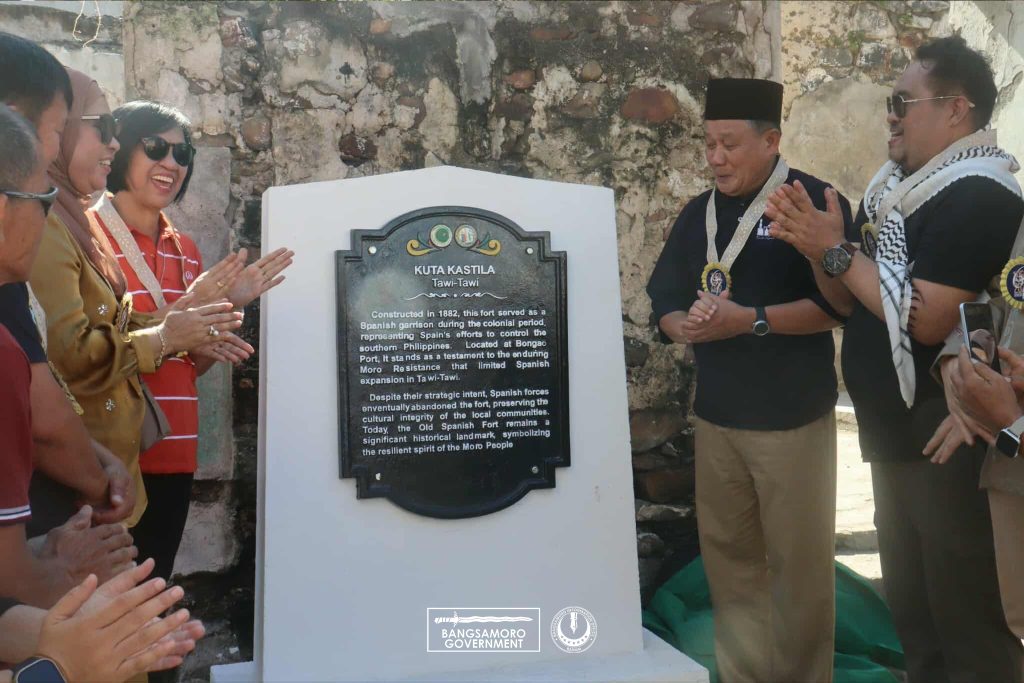
Just two days later, on July 5, the second historical marker was installed in Barangay Poblacion, Bongao, Tawi-Tawi, at the site of Kuta Kastila, a Spanish-era fort built in 1882. The marker pays tribute to the resilience of the Moro people who resisted Spanish colonial expansion in the south. The fort was later abandoned by the Spanish and was rediscovered after a fire in the early 2000s.
BCPCH partnered with the Local Government Unit of Bongao in recognizing Kuta Kastila as a cultural treasure and a symbol of regional identity. The ceremony was led by Chairperson Lingasa, BCPCH Executive Director Akmad Mama, Tawi-Tawi Commissioner Elmasia Madjilon, and Bongao Municipal Administrator Mary Ann Abdulmunap.
“Heritage preservation is beyond safeguarding relics—it is about protecting the soul of our people. Every fort, every story, and every monument are pieces of who we are,” Lingasa noted.
Commissioner Madjilon added:
“Naitatala natin ang kasaysayan hindi bilang alaala ng pananakop kundi bilang pagpupugay sa katatagan ng ating ninuno.”
[We preserve our history not to remember colonization but to honor the resilience of our ancestors.]
The Kuta Kastila event was attended by key officials from the provincial tourism office, Ministry of Trade, Industry and Tourism – Tawi-Tawi, and local leaders, reflecting a united effort to preserve and celebrate Bangsamoro heritage.
The installations in Maguindanao and Tawi-Tawi mark the beginning of a series of commemorative efforts to be replicated across other BARMM provinces, including Lanao del Sur, Sulu, and Basilan. These efforts are in line with the Bangsamoro Government’s 12th priority agenda—to mainstream the region’s rich culture, heritage, and identity as a vital part of nation-building and peace.
Through these markers, the Bangsamoro Government not only preserves the memory of the past but also reinforces its commitment to cultural pride, historical truth, and the continuing journey toward self-determination and peace.